
I'm Moving My Entire GTM Workflow From Clay to Claude Code: Here's Why
The orchestration layer just changed. Here is what that actually means for your outbound stack.

Let me start with a confession.
I spent most of 2024 being a Clay evangelist. Told founders. Told clients. Probably told people who never asked. Clay is genuinely brilliant at what it does. The “GTM Engineer” as a career category? Largely a Clay invention.
So when I say I am moving toward Claude Code, I want to be precise. Because the take circulating right now (”just use AI, kill your stack”) is lazy and wrong. You deserve the honest version.
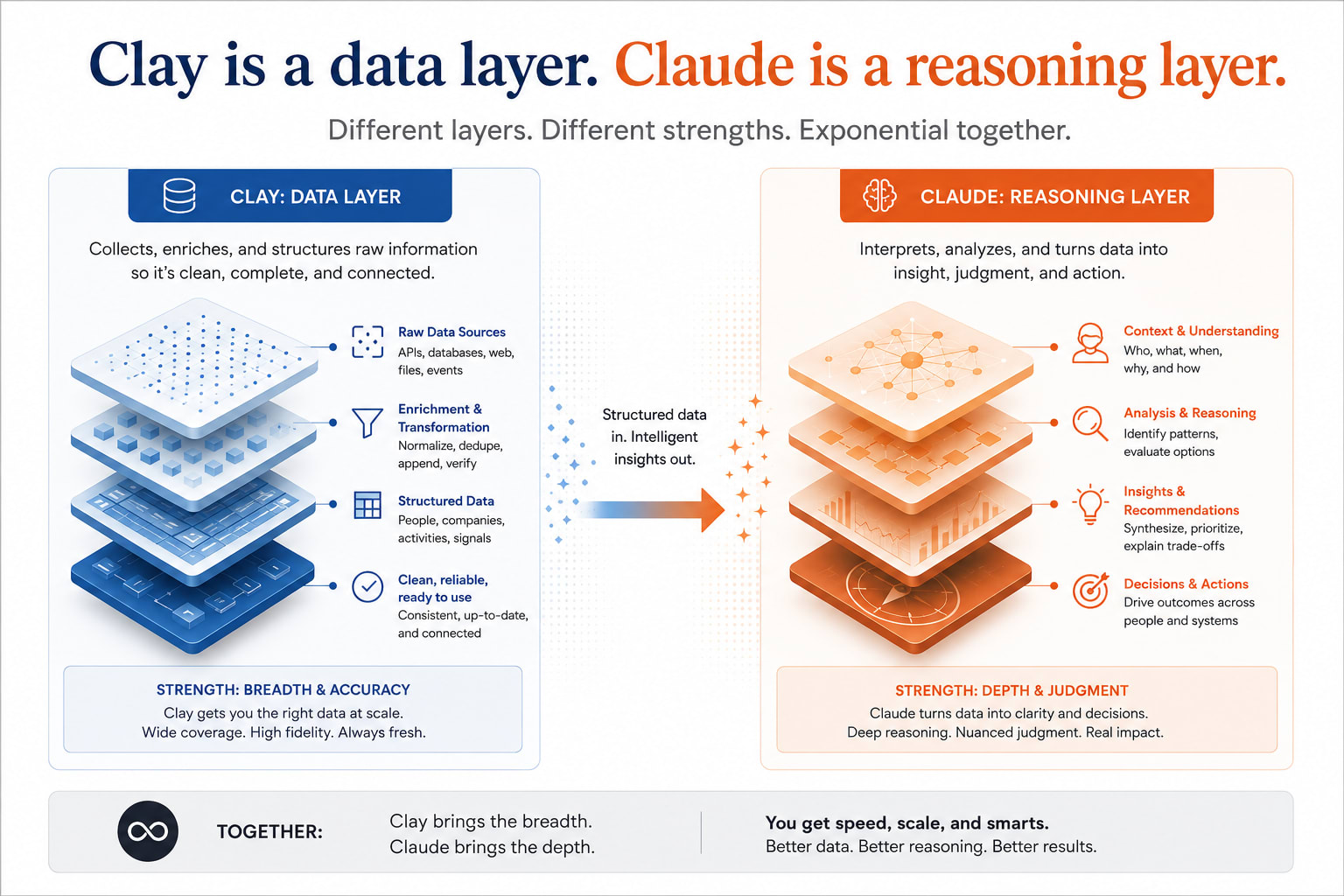
What Clay Actually Does
Clay is a data orchestration layer. At its core:
→ Source contacts
→ Enrich with waterfall providers
→ Qualify by fit
→ Export to CRM or sequencer
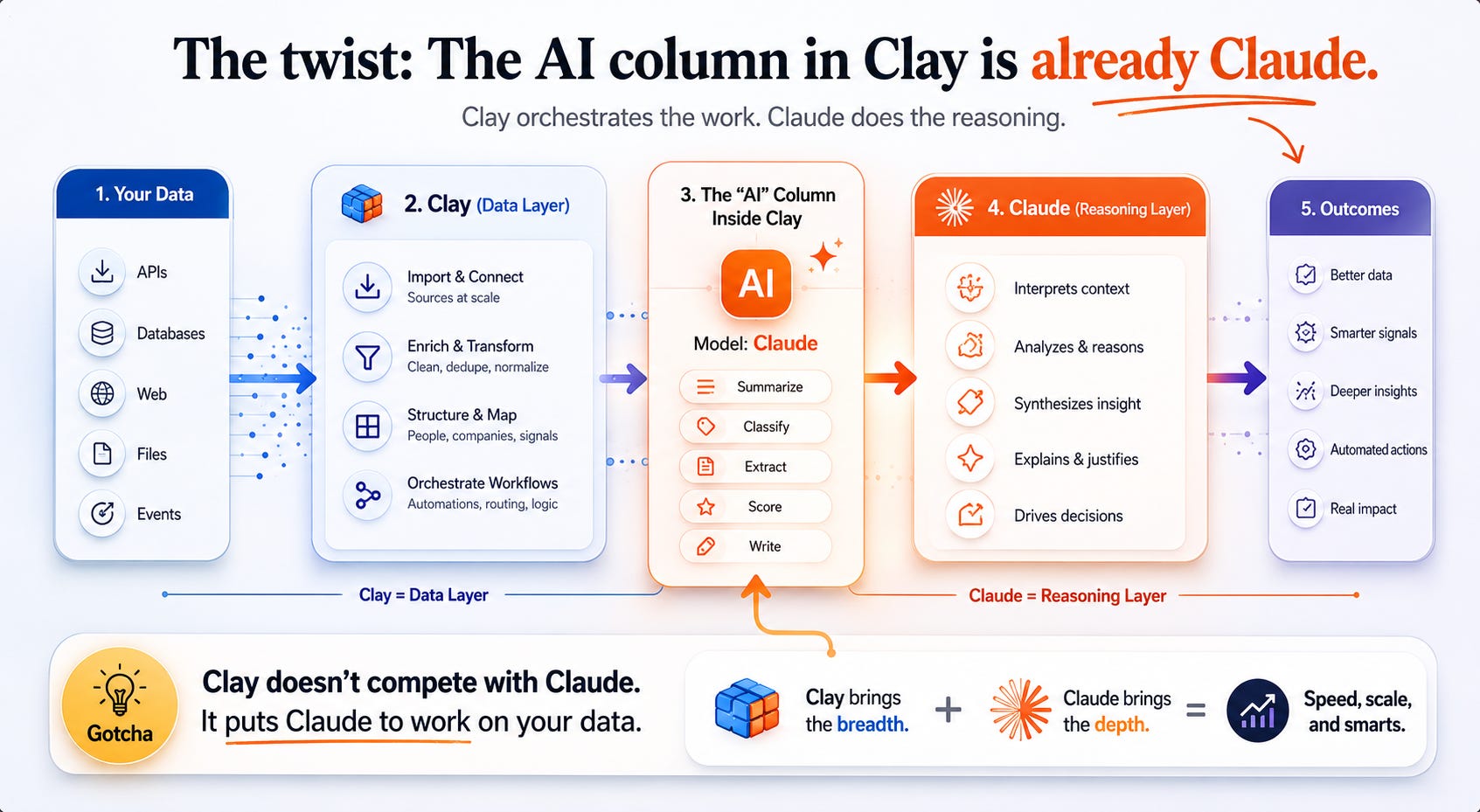
It is really good at that job. What it is not is a reasoning engine.
Here is the part that stops most people: Clay’s AI columns already let you pick Claude as the model. A significant chunk of Clay’s “intelligence” layer is Claude under the hood. There is even a native Clay-in-Claude MCP integration.
So “Clay vs Claude” was half-wrong from the start. The real question is where the reasoning happens,
What Was Breaking in My Old Workflow
My before state: Apollo + Sales Navigator for sourcing, Clay for enrichment waterfall, a Claude AI column at the end for personalisation, then export to Smartlead.
It worked. It produced a real pipeline for clients. But three things kept breaking:
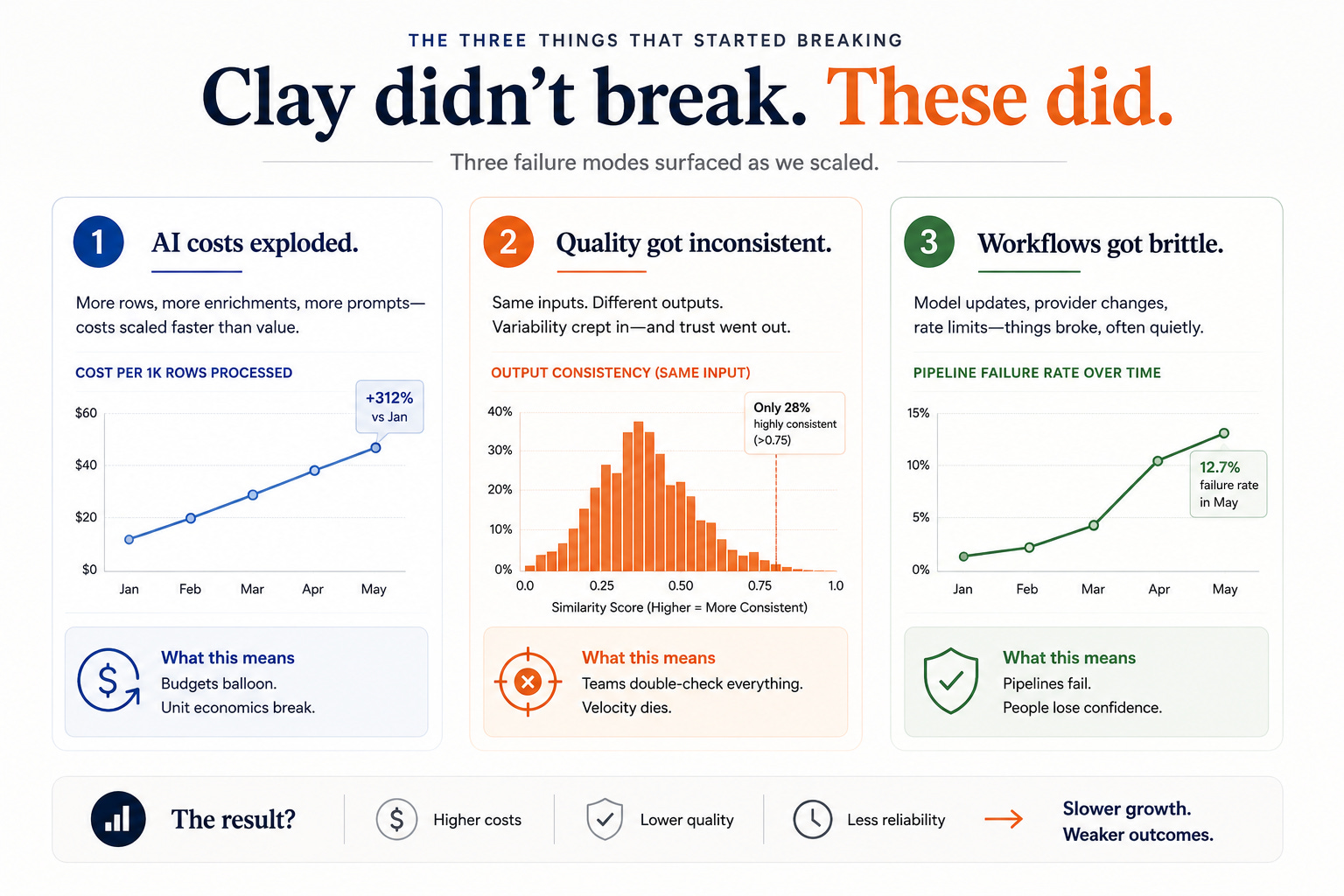
1. Credits punish curiosity
Every enrichment step has a cost. Every experiment has a ceiling. Teams run the same playbooks over and over because iteration is expensive.
2. Logic lives inside the table, not your head
Clay tables get to 40 columns fast. When the one person who understands it leaves, the workflow goes with them.
3. The reasoning layer was always bolted on
Using Claude as a Clay column is like having a Formula 1 engine power a shopping cart. You can only feed it what fits in a prompt template. The model never sees the whole picture.
What Actually Moved to Claude Code
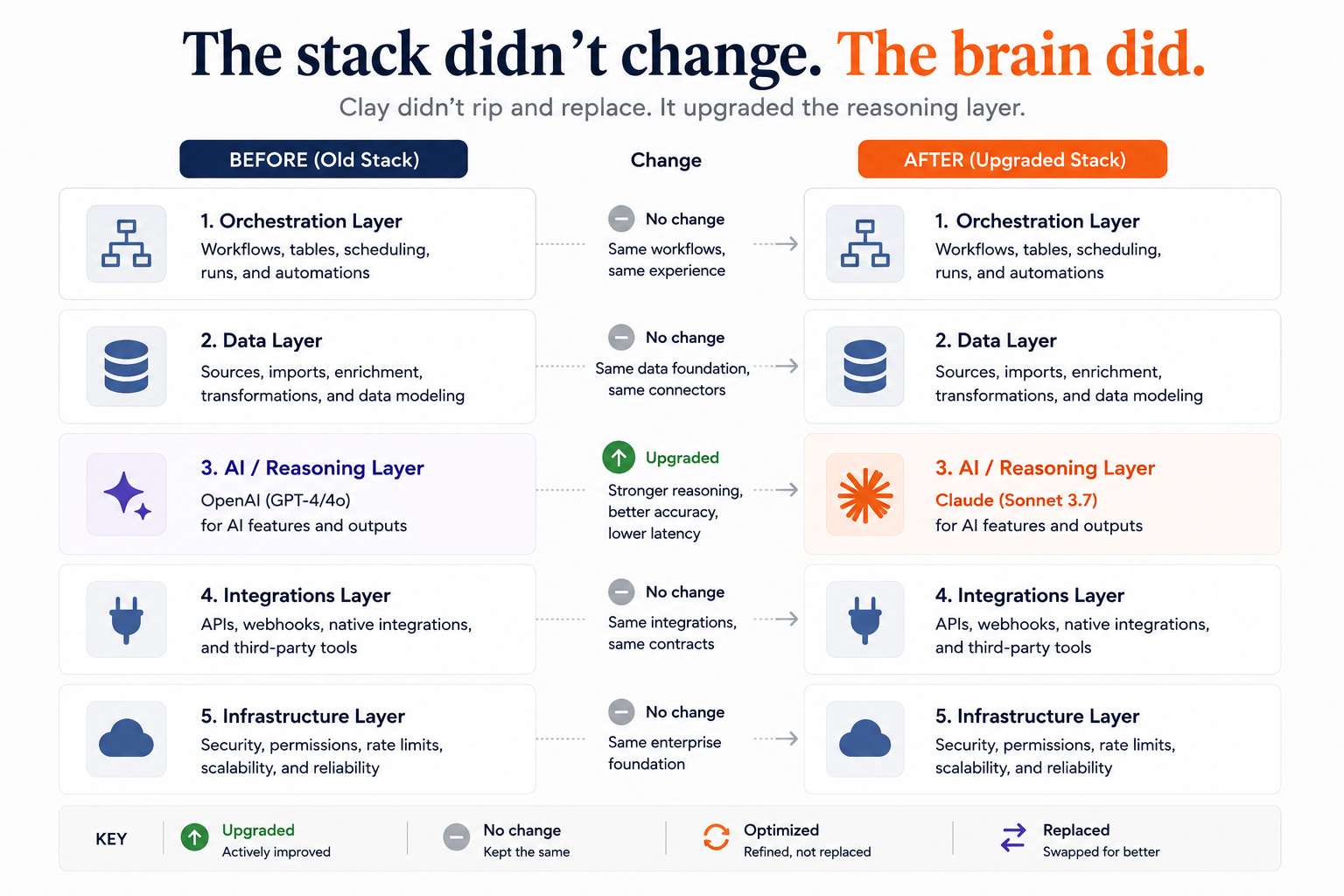
To be direct: Claude Code does not replace Clay’s data layer. You still need providers. Waterfall enrichment at 5,000+ contacts is not something you replicate with a prompt today.
What moves is the orchestration and reasoning layer.
Here is what that looks like in practice:
→ Claude Project holds ICP definitions, client context, signal hypotheses
→ MCP connectors pull from HubSpot, Notion, Slack, Gmail in one shot
→ Claude reads job postings, recent press, funding signals, synthesises a thesis
→ Output is a reasoned argument, not a template with variable fields
The email that comes out is not interpolated from a table. It is written with actual context about why this specific person should take a meeting right now.
The Numbers
One honest data point:
A Clay-based campaign for 500 accounts (full enrichment + AI columns) runs 800 to 1,200 Clay credits. That scales linearly with volume.
With Claude Code, the reasoning cost is a fraction of that. Data and orchestration are decoupled, so I can optimise each independently.
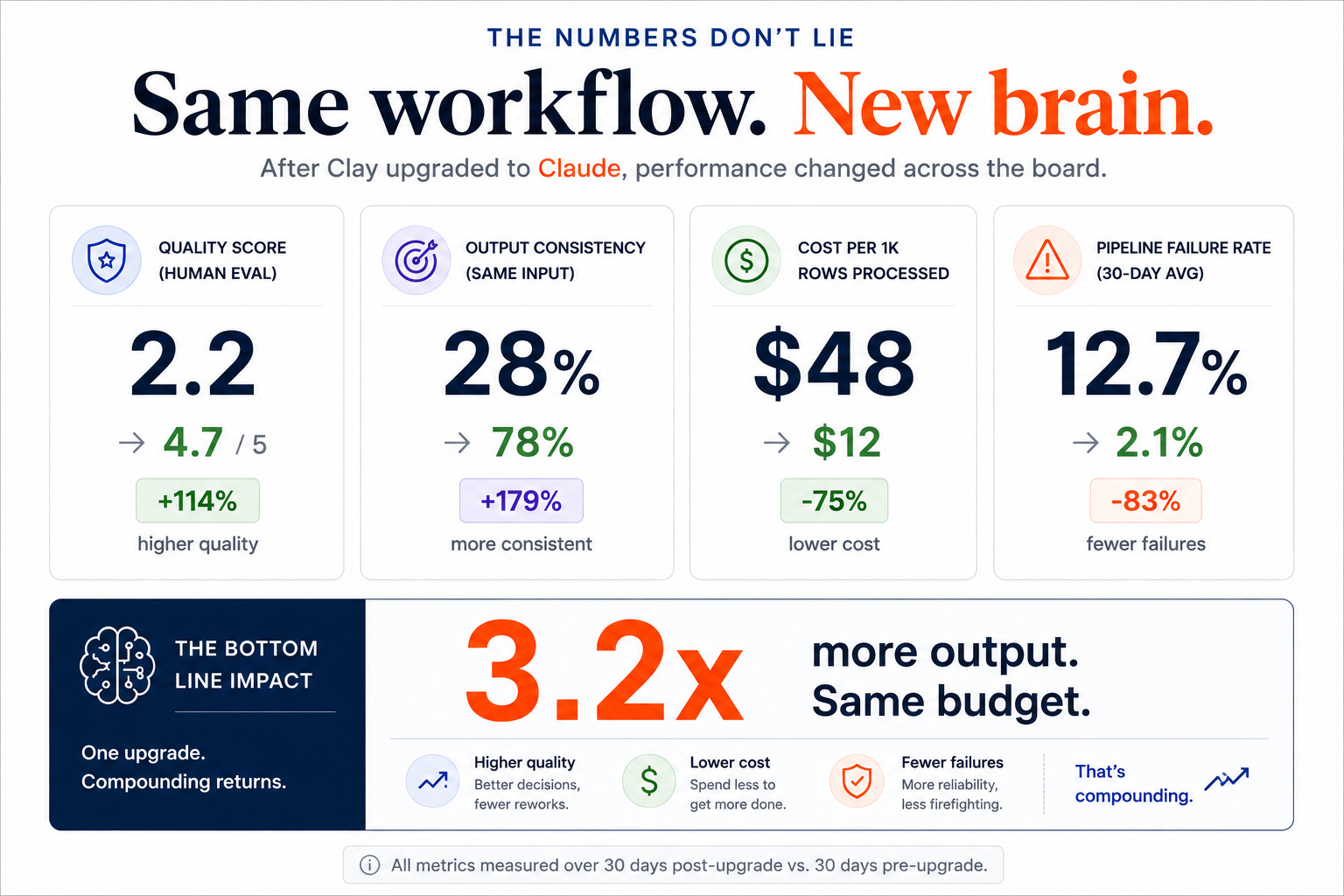
But the bigger saving is time. Here is the one number that actually matters:
What the Stack Looks Like Now
Sourcing still runs through Apollo and Sales Navigator. Sequencing still runs through Smartlead. Clay still handles high-volume list builds when a client needs scale. But the brain of the operation has moved.
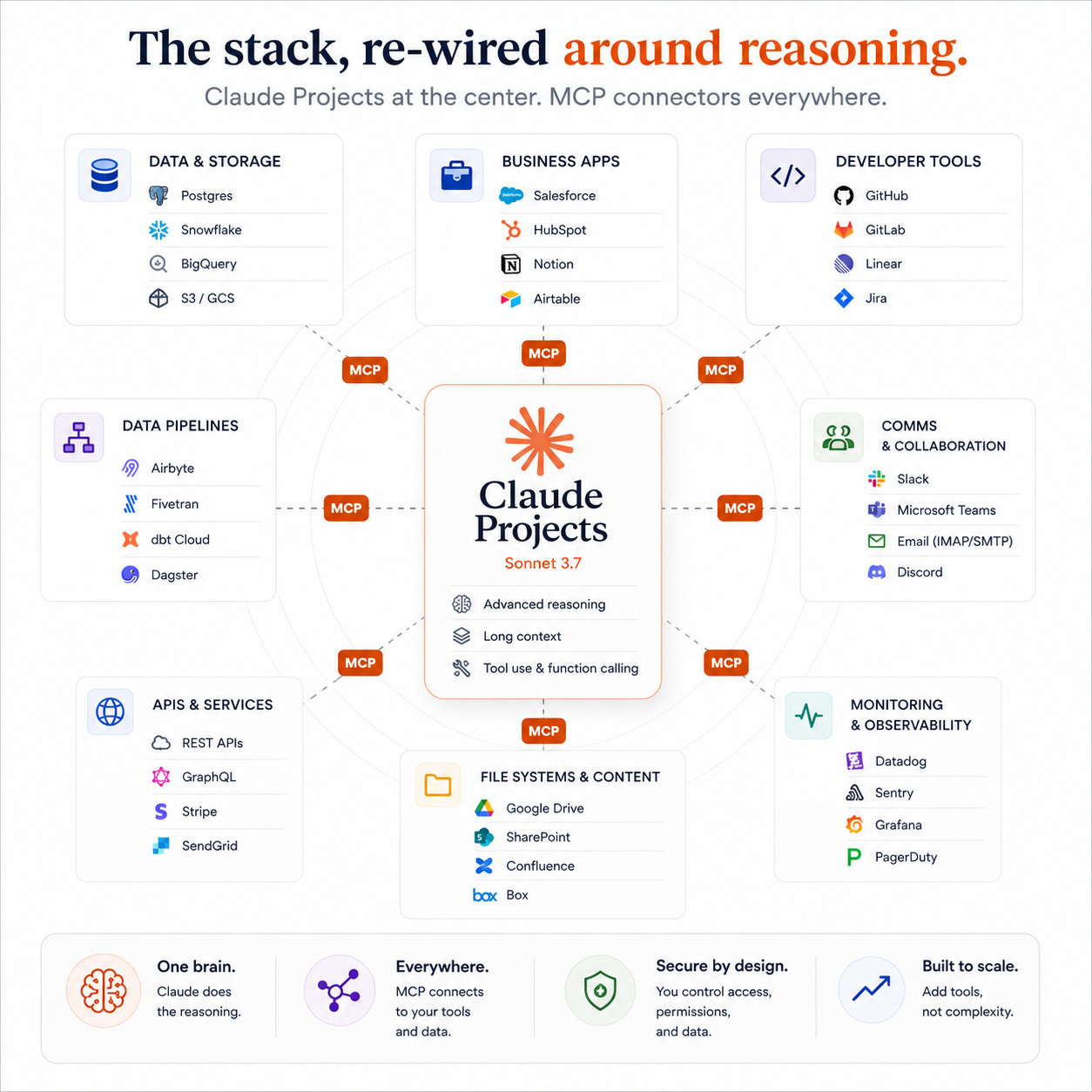
And this article was drafted inside that same system. Which I think is the most honest proof point I can offer.
The Bigger Shift
Clay’s community built the “GTM Engineer” identity around mastering a tool. That was the path to becoming indispensable.
The next version of that identity is not about a table. It is about reasoning clearly, translating that into a system, and deploying AI to execute it.
You do not need a four-person outbound team. You need a clear ICP, a reasoning layer with the right context, and the willingness to build something that is yours rather than renting someone else’s infrastructure forever.
That is the actual migration worth making.
If you are scaling a B2B SaaS GTM motion and tired of the List, Sequence, Hope loop, I publish the operational frameworks behind this work at OneGTMLab every week.
Subscribe. It will be in your inbox when it drops.
Or reach me directly at s@onegtmlab.com if you want to talk stack.