
Layer 2: GTM Engineering
GTM Engineering is the system that ensures the right message finds the right person.

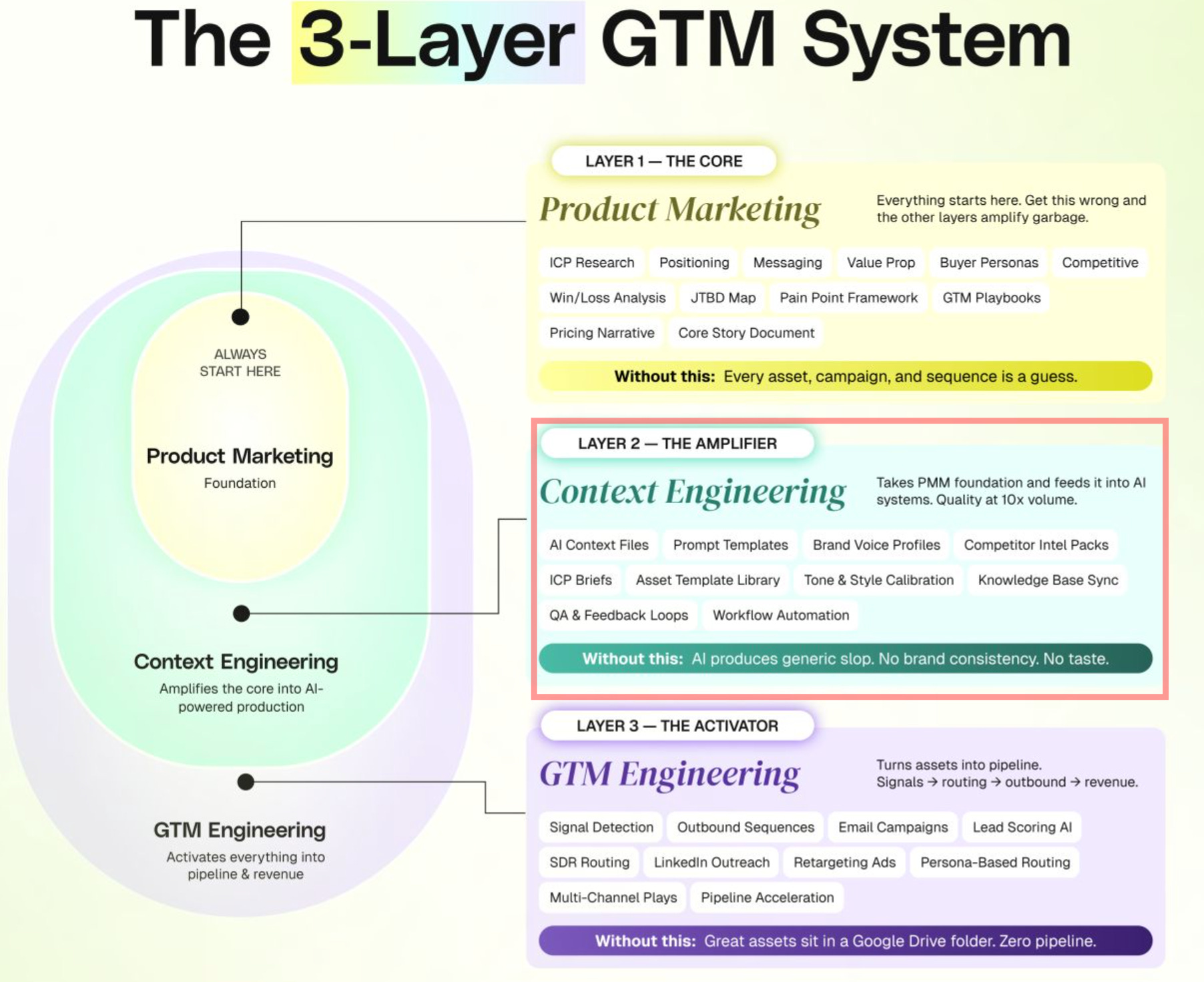
Last time, we talked about layer 1: Product Marketing, how to position what you sell so the right people actually care.
If you haven’t read it yet, start there. It sets the stage for everything that follows.
Because Product Marketing tells the world who you are. GTM Engineering? That’s how you reach them.
Layer 1 built the message.
Layer 2 builds the machine that delivers it.
So… What Actually Is GTM Engineering?
Let’s start from scratch.
GTM stands for Go-To-Market. It’s the plan for how you reach your customers — who you target, what you say to them, when you say it, and how you say it. Most companies have a GTM strategy. Very few have a GTM engineering layer.
So what’s the difference? Think of it this way:
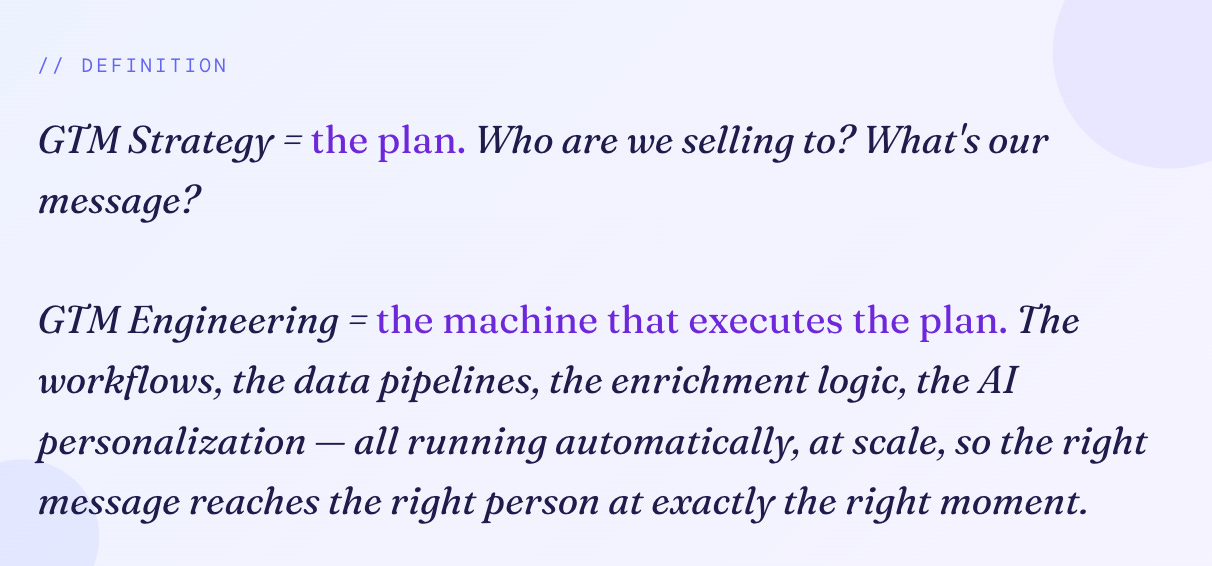
Most teams skip the engineering layer entirely. They write a good email, send it to a big list, and wonder why nobody replies. The problem isn’t the email. It’s that there’s no system behind it.
That’s what this post is about. Let me walk you through every piece, one step at a time.
Why Does Most Outbound Fail? (Hint: It’s Not the Email)
Here’s something most people get wrong.
When outbound isn’t working, the first instinct is to fix the copy. Better subject line. More personalized opener. Different call-to-action.
But here’s the uncomfortable truth, the email is rarely the problem. The problem is the system (or lack of one) behind it.
Who are you actually sending to, and how did you pick them?
How do you know they’re ready to buy right now?
What triggered this outreach, a signal, or just a Monday morning schedule?
Is the message tied to something real happening in their world?
If you can’t answer these questions clearly, you’re not doing outbound — you’re doing spray-and-pray with a nicer font.

GTM Engineering answers all of those questions, automatically, before a human ever touches the outreach. That’s the shift. From guesswork to a system.
First, You Listen. What Are the Signals?
Imagine you knew exactly when a potential customer was about to go looking for what you offer. That’s what signal detection does.
A signal is any real-world event that suggests a company might be ready to buy. Instead of guessing, your system watches for these events automatically, and triggers outreach the moment they happen.
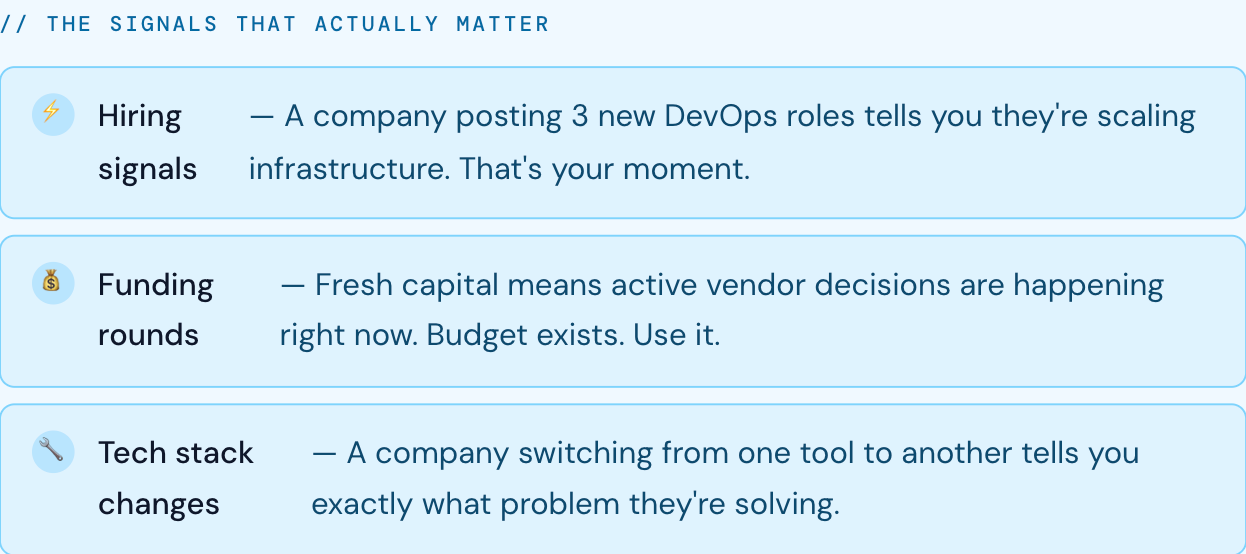
Why does this matter?
Your competitors are sending cold emails blindly. You’re sending them at the exact moment a company has a reason to listen. That timing gap is your entire advantage.
But Not Every Signal Is Worth Chasing. Here’s How You Filter.
Just because a company shows a signal doesn’t mean they’re a fit for you. A 5-person startup raising a pre-seed and a 500-person enterprise raising a Series C are both “funded”, but they need completely different things.
This is where ICP Filtering comes in. ICP stands for Ideal Customer Profile. Think of it as your rulebook for who actually belongs in your pipeline.
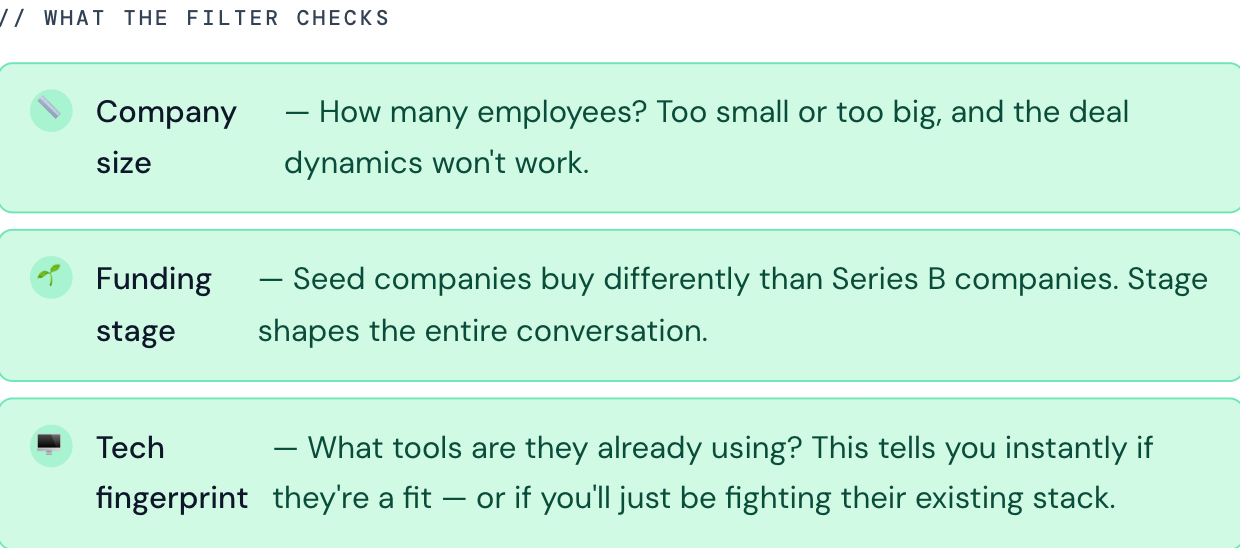
By the time an account clears the ICP filter and reaches personalization, we already know more about them than most sales reps learn in a full discovery call.
That’s the edge, and it compounds.
Now We Write the Message. But Not How You’d Expect.
Here’s where people get nervous: AI-written outreach. And honestly? They’re right to be suspicious. Most AI-generated emails are painfully obvious. They feel robotic. Buyers spot them in the first line and delete them.
The problem isn’t AI. The problem is how most people use AI. They feed it a name and a company and ask it to “personalize.” We do something completely different.
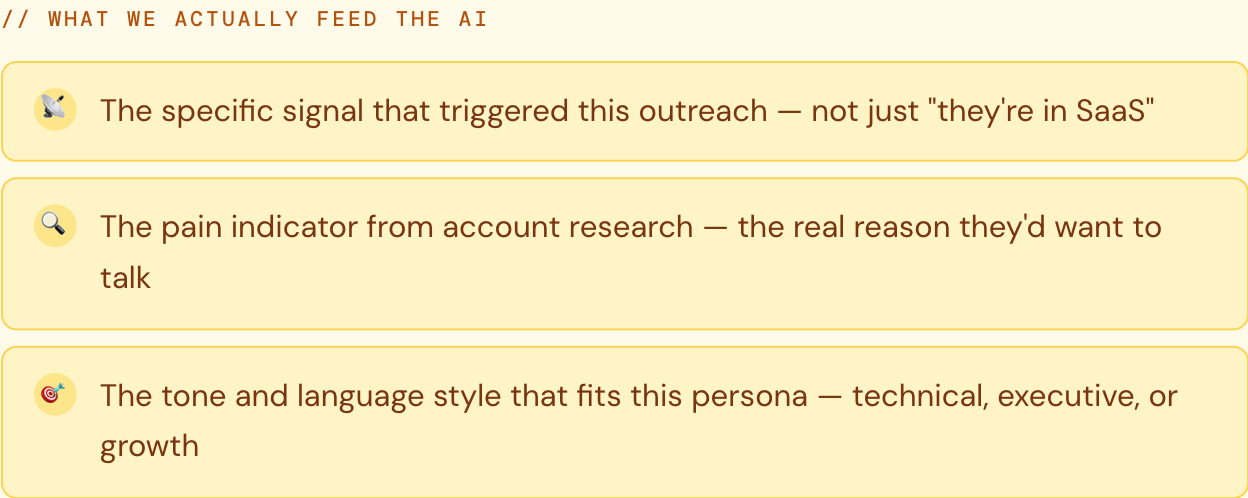
GPT-4 drafts the message with all of that context baked in. Then a human reviews it. It only sends when both gates are cleared. The result reads like someone did their homework, because the system did.
The Rule
If a prospect can tell it was AI-generated, it’s not ready to send. Full stop. Every message goes through a human review before it ever reaches an inbox.
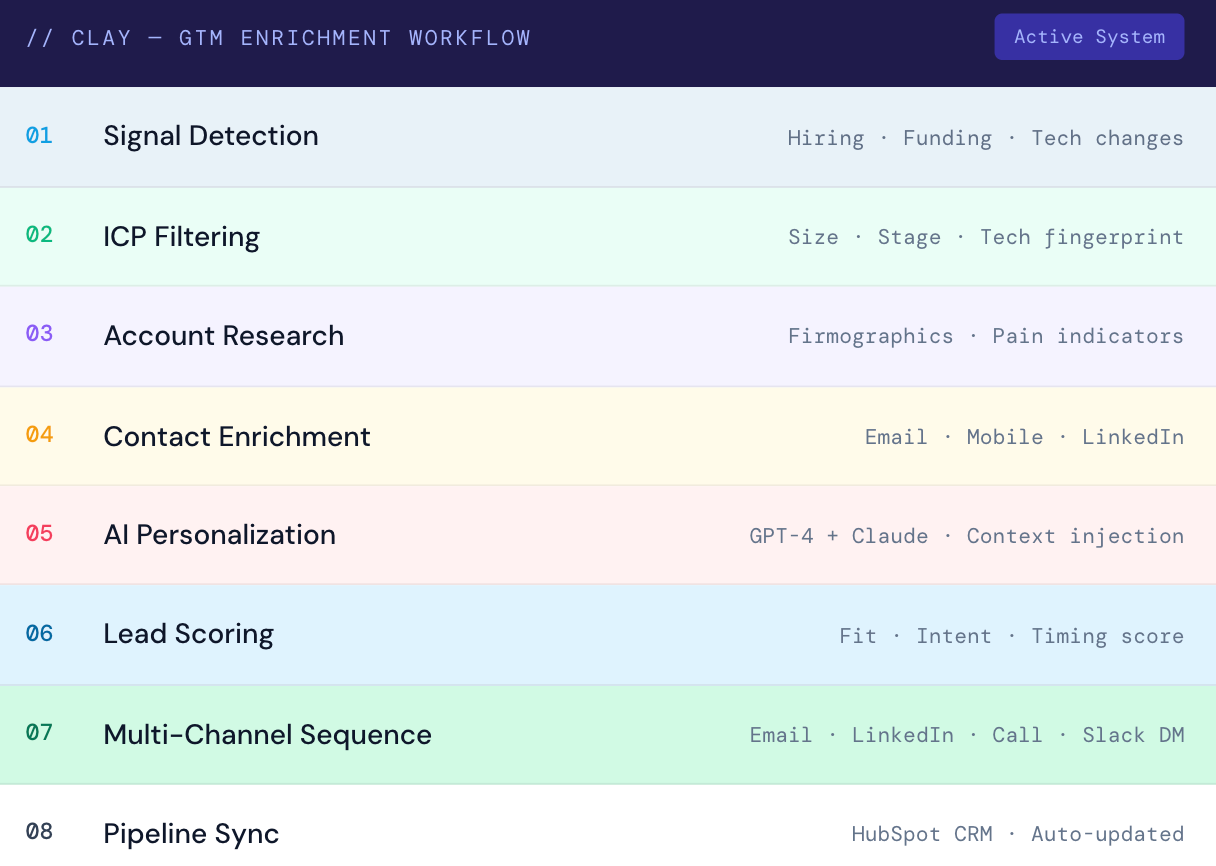
Here’s the Entire 8-Step System — End to End
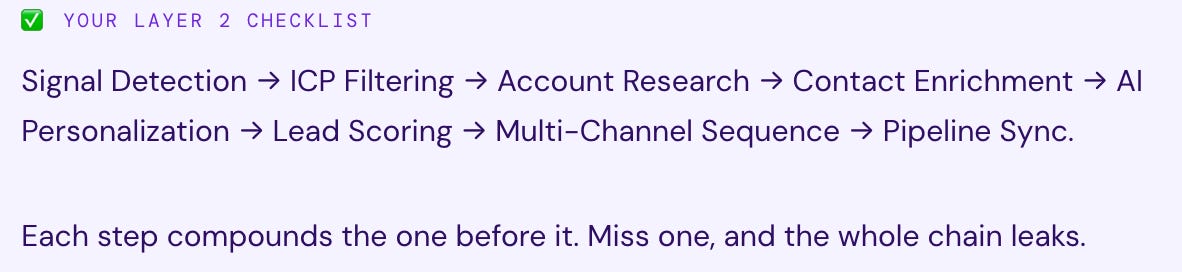
Now that you understand the pieces, here’s how they connect. This is the complete GTM Engineering workflow we build for every client, custom, not templated, running on Clay.
What Tools Power All of This? Let’s Keep It Simple.
You don’t need a dozen tools. You need the right four, connected with the right logic. Here’s what we use, and what each one actually does:
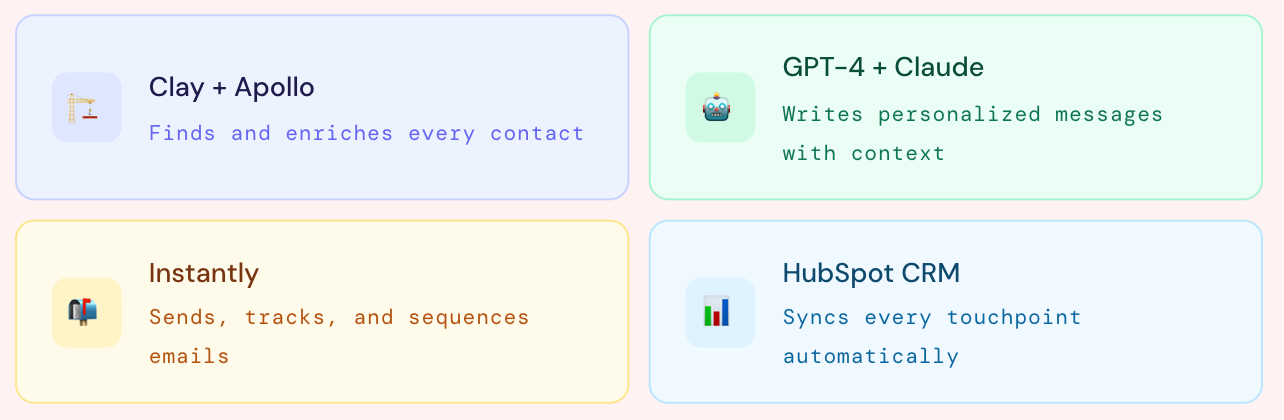
Note: The magic isn’t the tools, it’s the logic connecting them. Any team can buy a Clay subscription. Not every team knows how to wire it into a system that runs clean at scale without breaking every week.
So… Is GTM Engineering Right for You?
If you’re just getting started with outbound, GTM Engineering might feel like a lot. And honestly? It is. But here’s the thing, you don’t have to build all of it at once.
Start with signals.
Pick one trigger, a hiring signal, a funding announcement, and build your outreach around it. See what happens. Then add the next layer. That’s how the machine gets built.
And if you’re already doing outbound but it’s not converting, this is almost always the reason. It’s not the copy. It’s that there’s no system making sure the right message gets to the right person at the right time.
Want This Built for Your Pipeline?
I take on a small number of clients at a time.
If you’re done doing outbound manually and want a system that actually scales, let’s have a straight conversation.
No pitch deck. No fluff. Just 30 minutes to see if we’re a fit.
Great post! The distinction between Product Marketing and GTM Engineering as Layer 1 and 2 is a very helpful mental model. I currently did the manual Layer 1 work at my new job (icp, positioning, messaging, competitive..) and starting to tackle Layer 2 now. This gave me a lot of clarity on the system I need to build. Looking forward to learning more about this!