
Why Clay Spent 3 Years Confusing Everyone (And What It Cost Them)
The real price of a positioning problem isn't a bad launch; it's a slow, invisible bleed.

Imagine building something that genuinely impresses every single person who sees it.
Recruiters love it. Salespeople want it. Engineers are hacking it into workflows you never designed for. Everyone walks away excited. Almost nobody comes back tomorrow.
That’s not a product problem. That’s a positioning problem, and Clay lived inside that exact confusion for three years before $30M ARR became possible. Here’s the full teardown.
The Product Was Magical. The Story Was Nowhere.
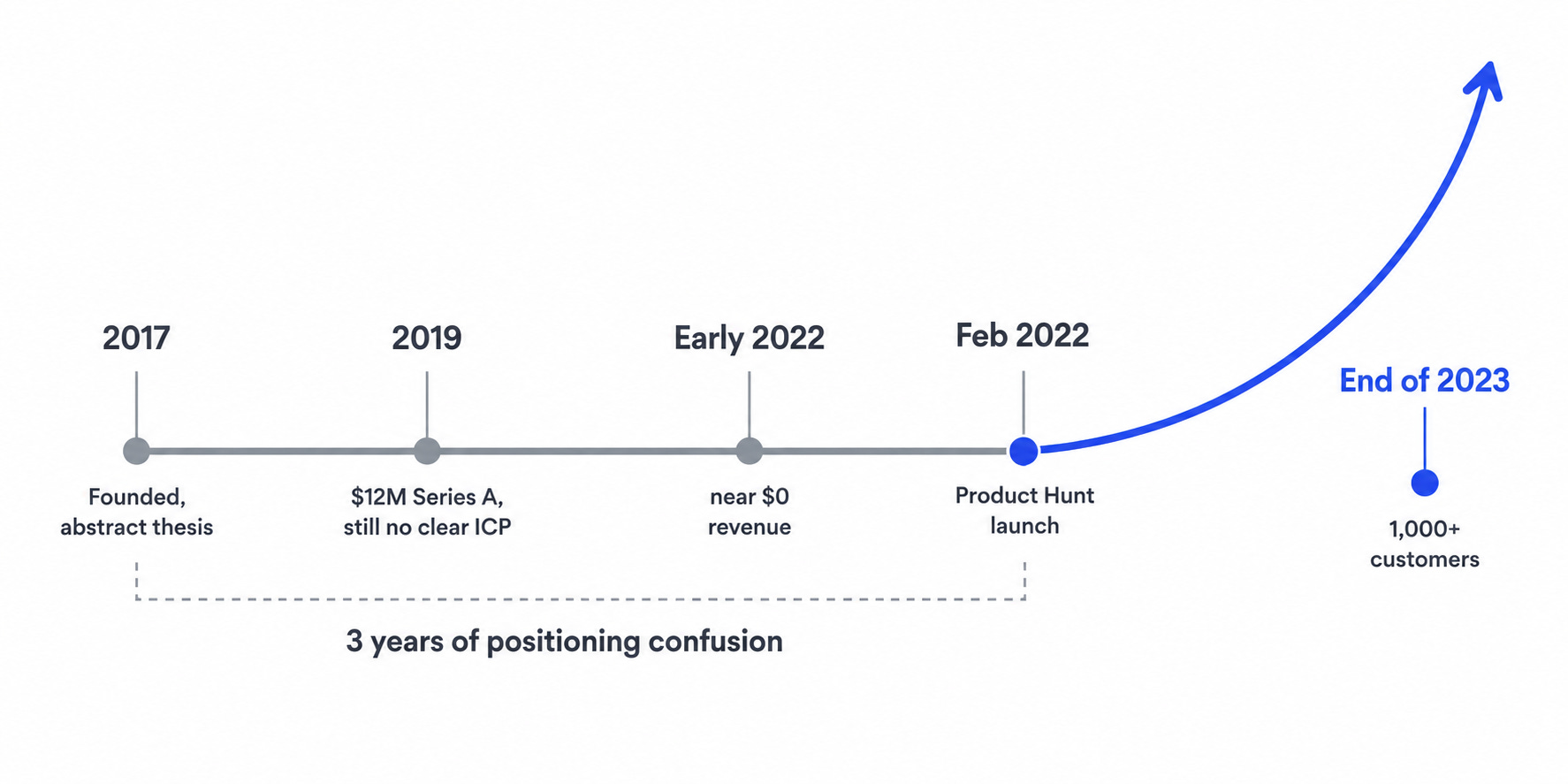
Clay launched in 2017 with a founding thesis that sounded inspiring and sold nothing: make the power of programming accessible to more people.
The early product was genuinely impressive, a spreadsheet that pulled live data from dozens of internet databases in real time.
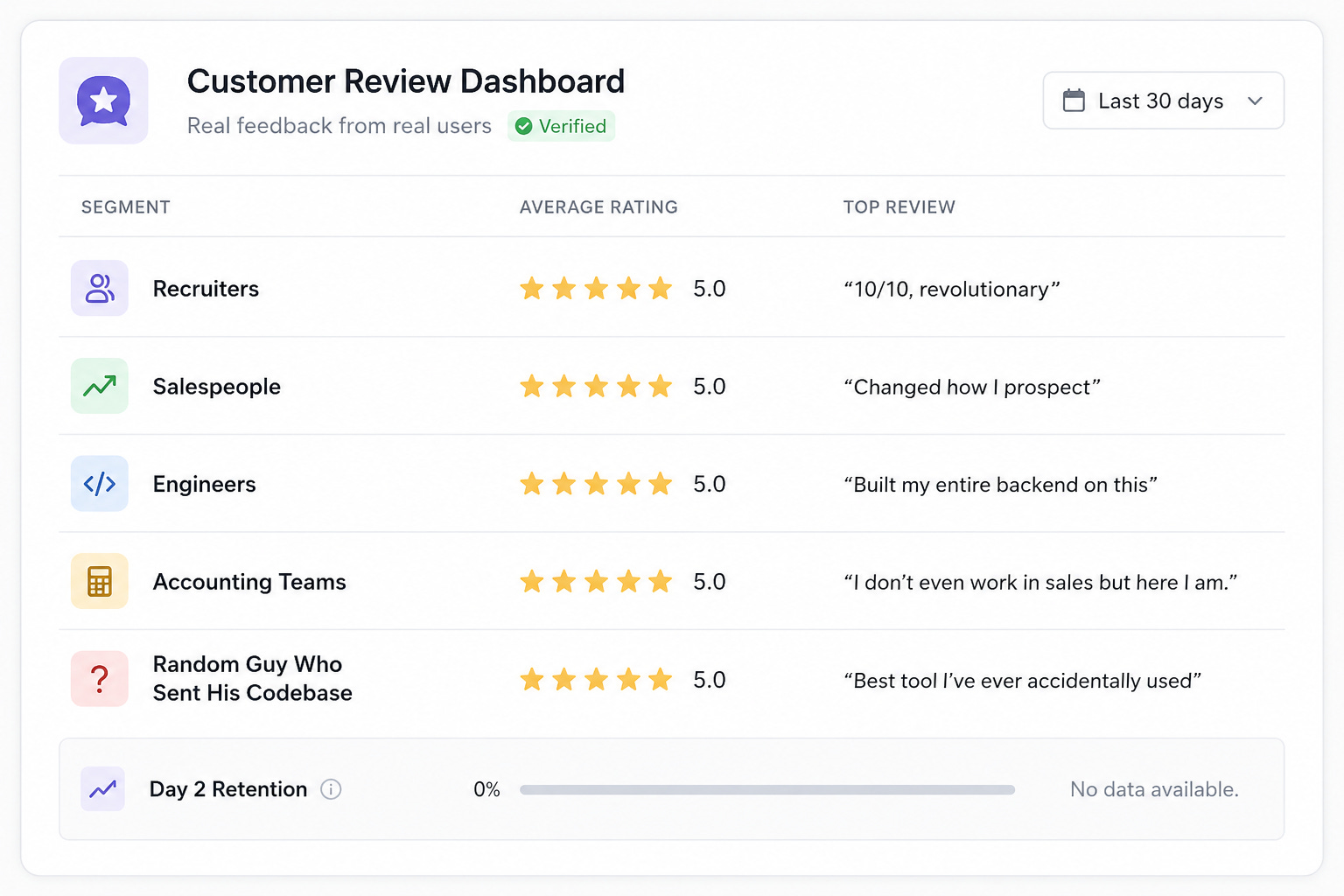
↳ Recruiters used it to find candidates.
↳ Salespeople used it for outbound prospecting.
↳ Engineers built low-code backends on top of it.
↳ One customer literally sent Kareem Amin their entire codebase.
Every new conversation revealed a brand new use case. Every use case felt like validation.
It wasn’t.
↳ Excitement was everywhere. Retention was not.
↳ The most common reaction? “Wow, this is so powerful!”
↳ Day-2 usage was the rarest thing in the room.
That gap between wow and return, that’s exactly where positioning lives, and where Clay was bleeding out quietly.
But Here’s What Made It Worse. They Already Knew the Answer.
The frustrating part isn’t that Clay had no sense of direction. It’s that they had one, and still couldn’t get it to land.
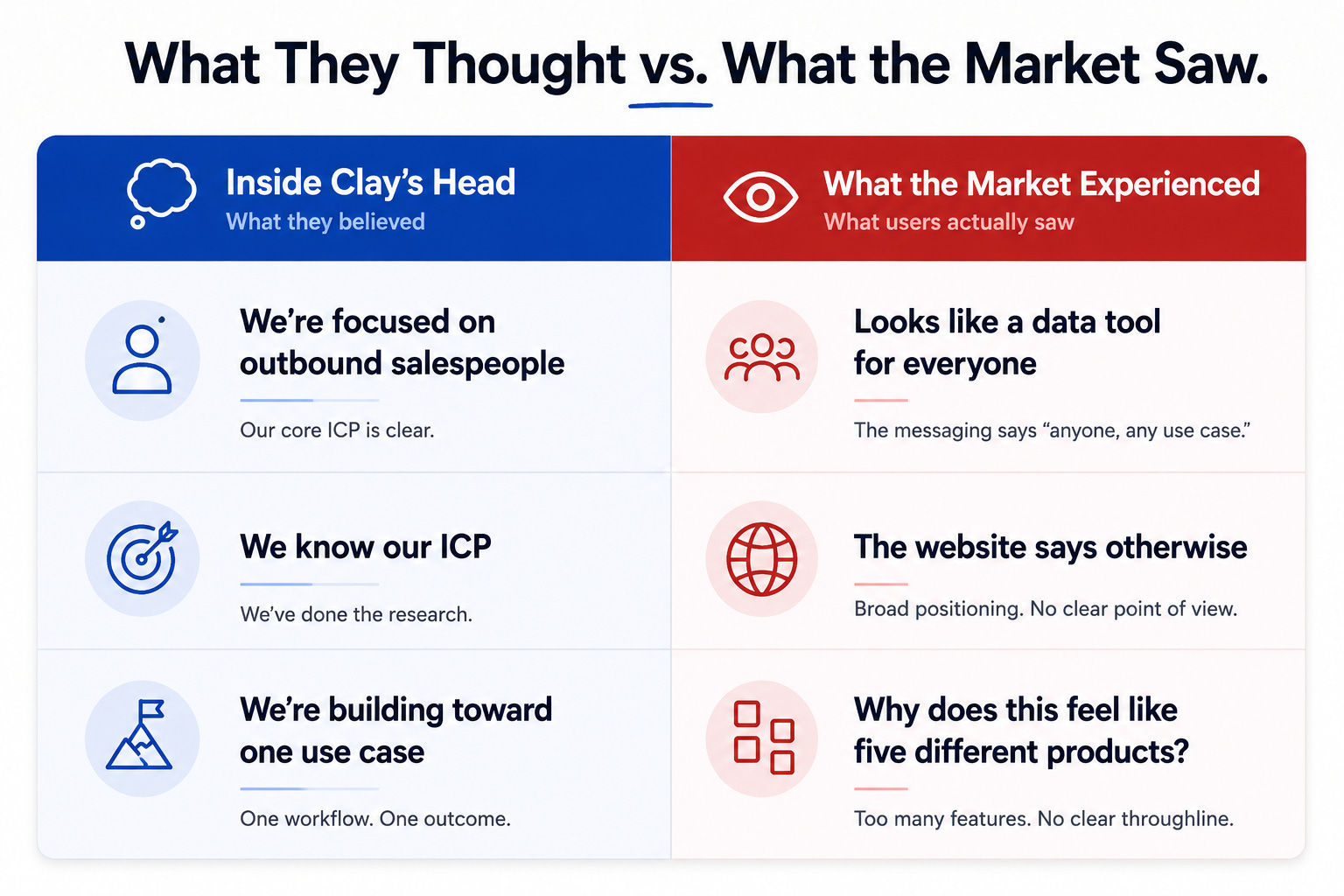
Three and a half years in, the team was mentally locked on outbound salespeople as their ICP.
That was clear internally. But the website didn’t say it. The roadmap didn’t reflect it. The sales pitch shapeshifted based on whoever was in the room that week.
Internal clarity and external positioning are not the same thing. And the market just saw a powerful, confusing tool that seemed to do everything for everyone.
The rationalizations kept them stuck:
↳ “Recruiting is basically sales, so targeting recruiters isn’t losing focus, right?”
↳ “If we build auto-enrichment, maybe people use us as a CRM.”
↳ “Airtable and Notion stayed horizontal. Why not us?”
Each one made perfect sense in isolation. Together, they added up to three years of quiet drift.
The Real Culprit Wasn’t Strategy. It Was Founder Psychology.
And this is the part most positioning advice never goes near.
The confusion wasn’t just a GTM execution problem. It was a psychological one.
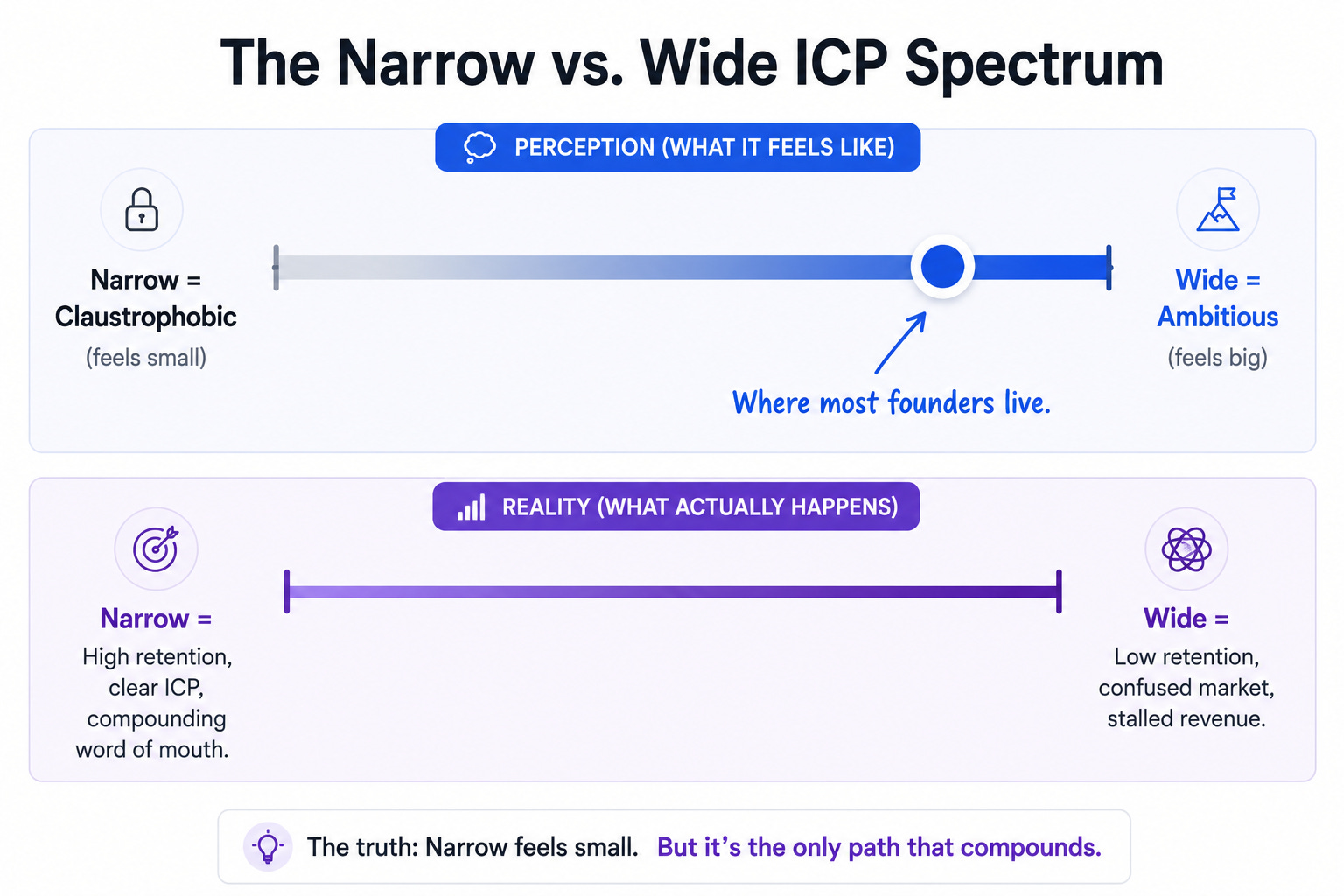
Narrowing felt claustrophobic. Staying wide felt like ambition.
The lure of the horizontal product, the belief that we could be everything to everyone, is genuinely seductive when you’ve built something flexible enough to actually pull it off.
Amin’s own words: “There was something in my psychology that made me feel like, ‘Oh, we could do anything.’ That wasn’t obvious until I really dug in.”
The fix wasn’t a rebrand or a new messaging deck. It was three hard, operational commitments that made the choice impossible to walk back:
↳ Cut features that weren’t relevant to outbound salespeople
↳ Rewrite website copy to reflect one specific ICP and only one
↳ Stop chasing adjacent use cases, even when customers self-selected into them
Late. Painful. Completely necessary.
What Happened Next Was Almost Embarrassing in Its Speed.
From near-zero revenue in spring 2022 to $30M+ ARR by 2024.
Two back-to-back years of 10x revenue growth.
A $46M Series B. Over 100,000 users and 2,500+ customers including Anthropic, Notion, and Vanta.
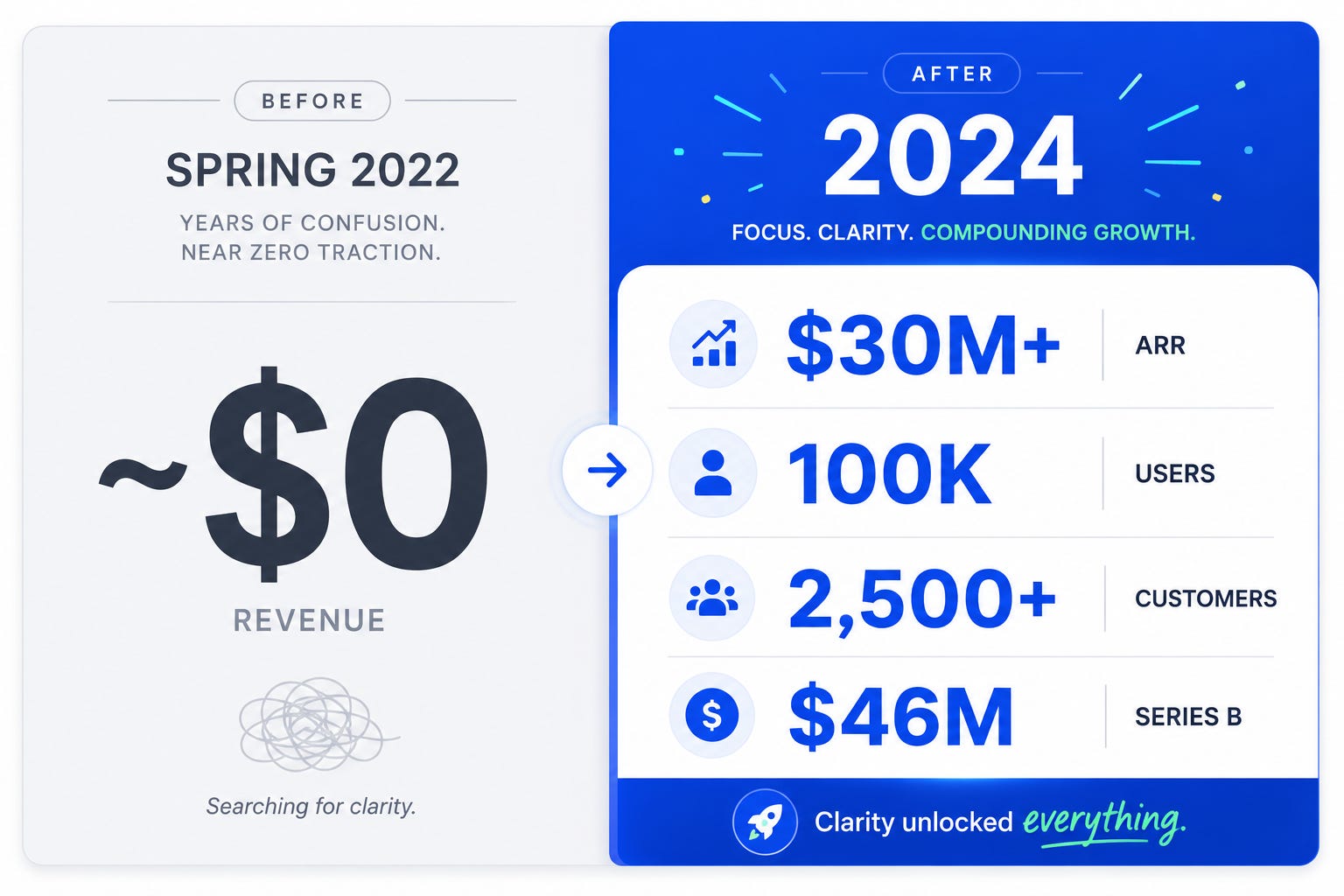
And three signals that told them PMF had finally crossed the line:
↳ People started publicly calling themselves Clay experts and onboarding others for free
↳ Entire agencies built businesses on top of Clay, some crossing seven figures in revenue
↳ 60+ organic meetup groups appeared across 30 cities, with zero prompting from the team
That last one says everything. Nobody manufactures organic meetups. That’s what happens when a product finally has an identity, people rally around it like a flag.
The lesson here isn’t that Clay was slow.
The lesson is that getting to the right positioning is often harder than building the right product.
Most teams get the product 80% right in year one. They spend the next three years failing to explain it.
If your product impresses everyone but retains nobody, that’s not a feature problem. That’s your sign.
I write about GTM strategy, positioning, and what actually works in early-stage B2B, no fluff, no vanity metrics. If this landed, subscribe below. A new issue drops every week.