
Why Some GTM Motions Just Work While Others Flop? Well, There's Psychology Behind It.
Your buyers respond to signals they’ve trusted for years and here’s how to speak their language.

I came across Katelyn Bourgoin’s work on buyer psychology.
Not in a course, not in a playbook, just stumbling across her ideas on the internet the way you do when you’re up too late thinking about why a prospect ghosted you.
What she articulated gave me a framework for something I’d been sensing but couldn’t name: buyers aren’t rational, and they were never going to be.
Once that clicked for me. I stopped fighting it.
I started designing GTM around the patterns the brain already follows.
So, this is my attempt to lay that out clearly, the psychology behind every stage of a GTM motion, and the specific plays I’ve found actually move the needle.
Some GTM Motions Compounds And Others Just… Don’t. Here’s Why.
It’s rarely the tactic.
The follow-up sequence, the offer structure, the content format, those things matter, but they’re not what separates GTM motions that compound from ones that quietly collapse.
The real answer is simpler and more uncomfortable: most GTM is designed for rational buyers. But rational buyers don’t exist.
Here’s what I mean.
When someone decides to buy or not buy they’re not running a spreadsheet in their head.
They’re responding to signals. Familiarity. Authority. Social validation. Risk. Progress. Ownership.
These aren’t soft, fuzzy concepts. They’re hardwired cognitive patterns that the brain uses to make fast decisions under uncertainty.
And a GTM motion is, at its core, a sequence of moments where your buyer’s brain is making one fast decision after another.
↳ Does this person know what they’re talking about?
↳ Have others already trusted them?
↳ What do I risk by waiting? How close am I to a resolution?
The GTM motions that work, that generate warm inbound, that close without pressure — are almost always designed around these patterns, even if the people who built them couldn’t articulate why.
Now we can articulate it.
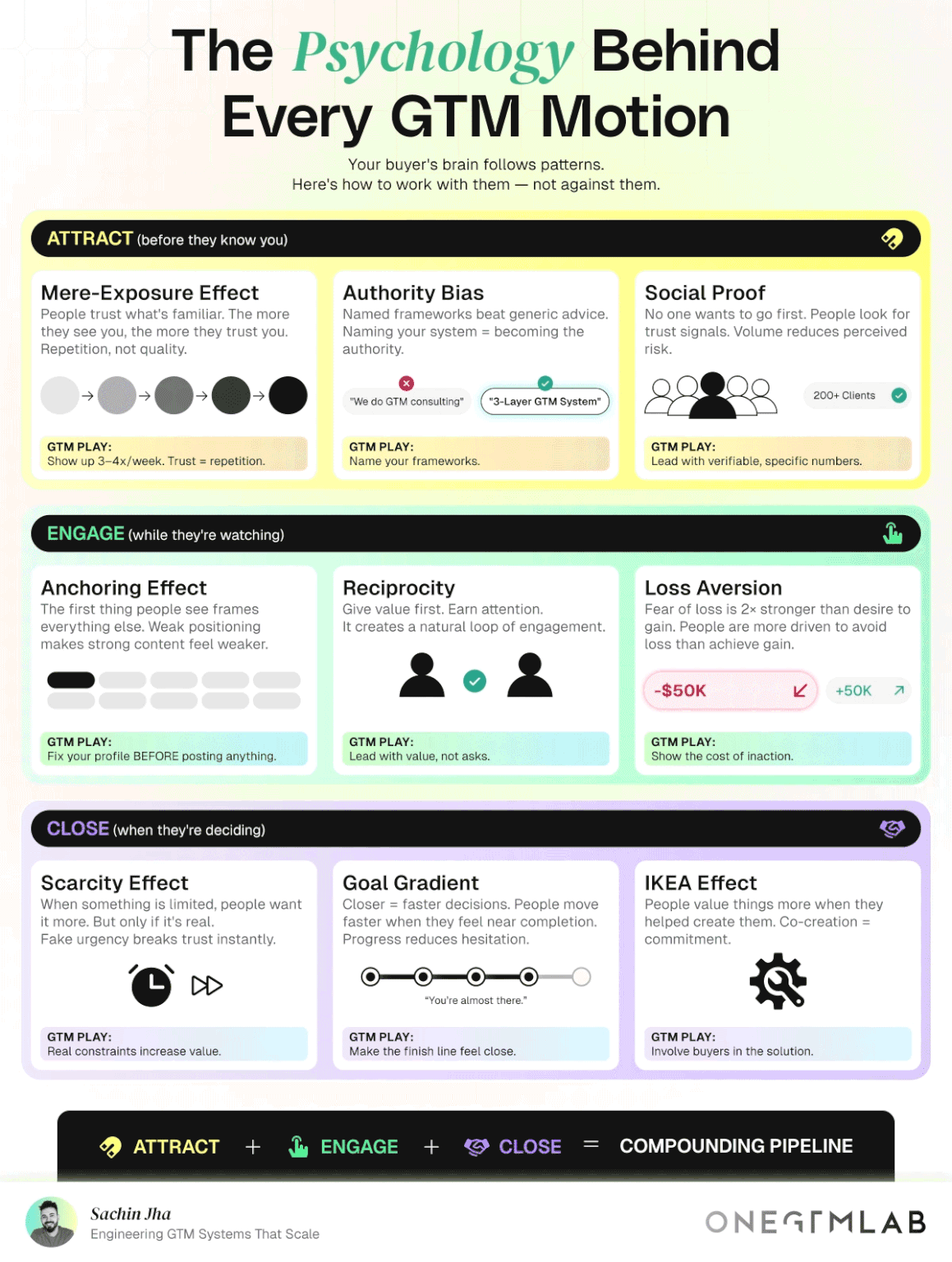
There are nine specific psychological principles that map almost perfectly onto three stages every buyer moves through: Attract, Engage, and Close.
Not as a funnel metaphor. As an actual model of how a brain moves from “never heard of you” to “where do I sign?” Let’s go through each one.
Phase 1# Attract — The Three Brain Tricks That Make Strangers Trust You. Before You Ever Say a Word.
The hardest part of any GTM motion isn’t closing a deal.
It’s getting someone to care in the first place.
The Attract phase is all about earning attention from people who have no reason to give it to you yet.
And surprisingly, it’s not about being the loudest voice in the room. It’s about being the most familiar, the most authoritative, and the most socially validated.
Here’s the psychology driving all three:
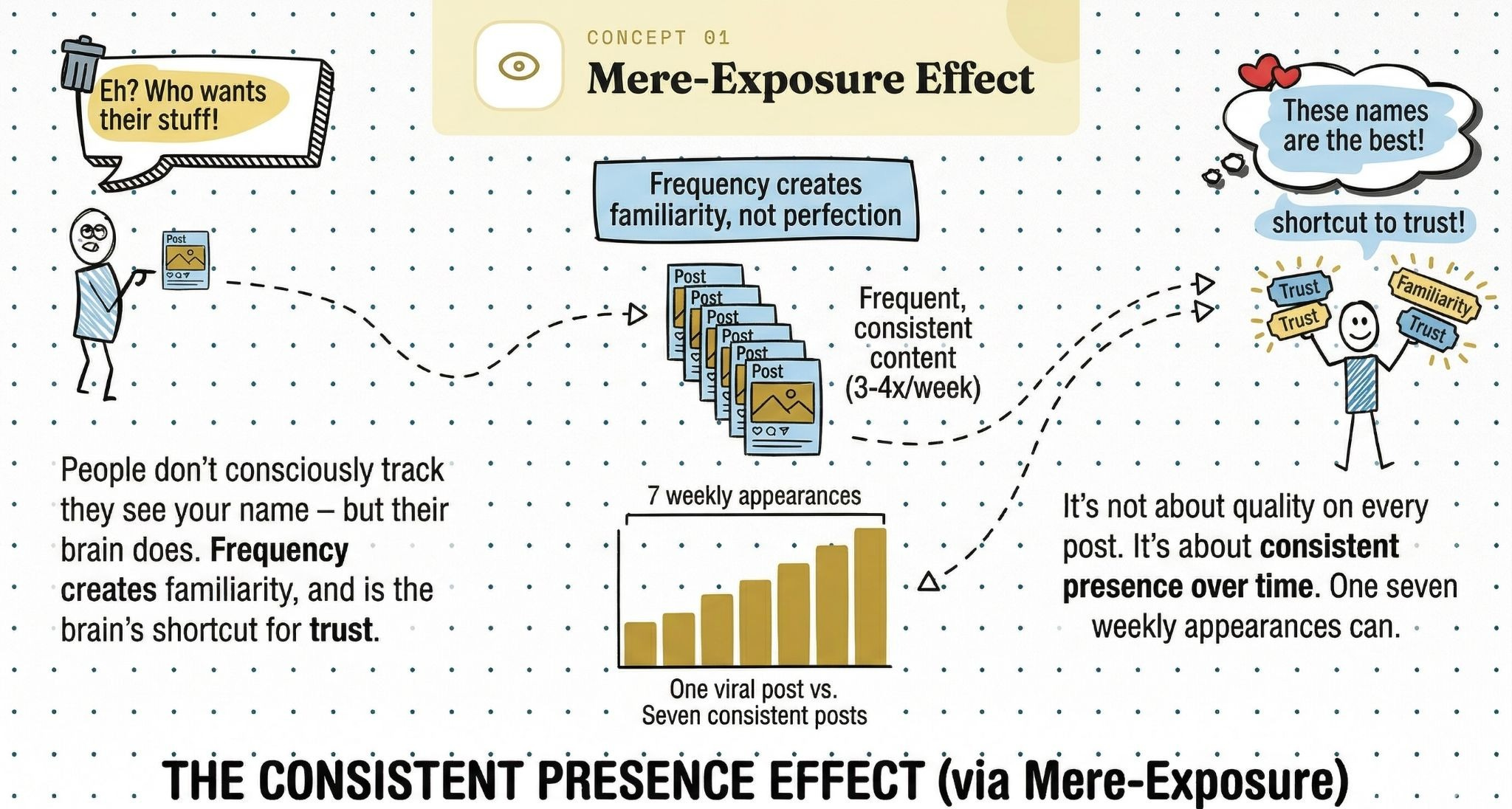
Concept 1# Mere-Exposure Effect
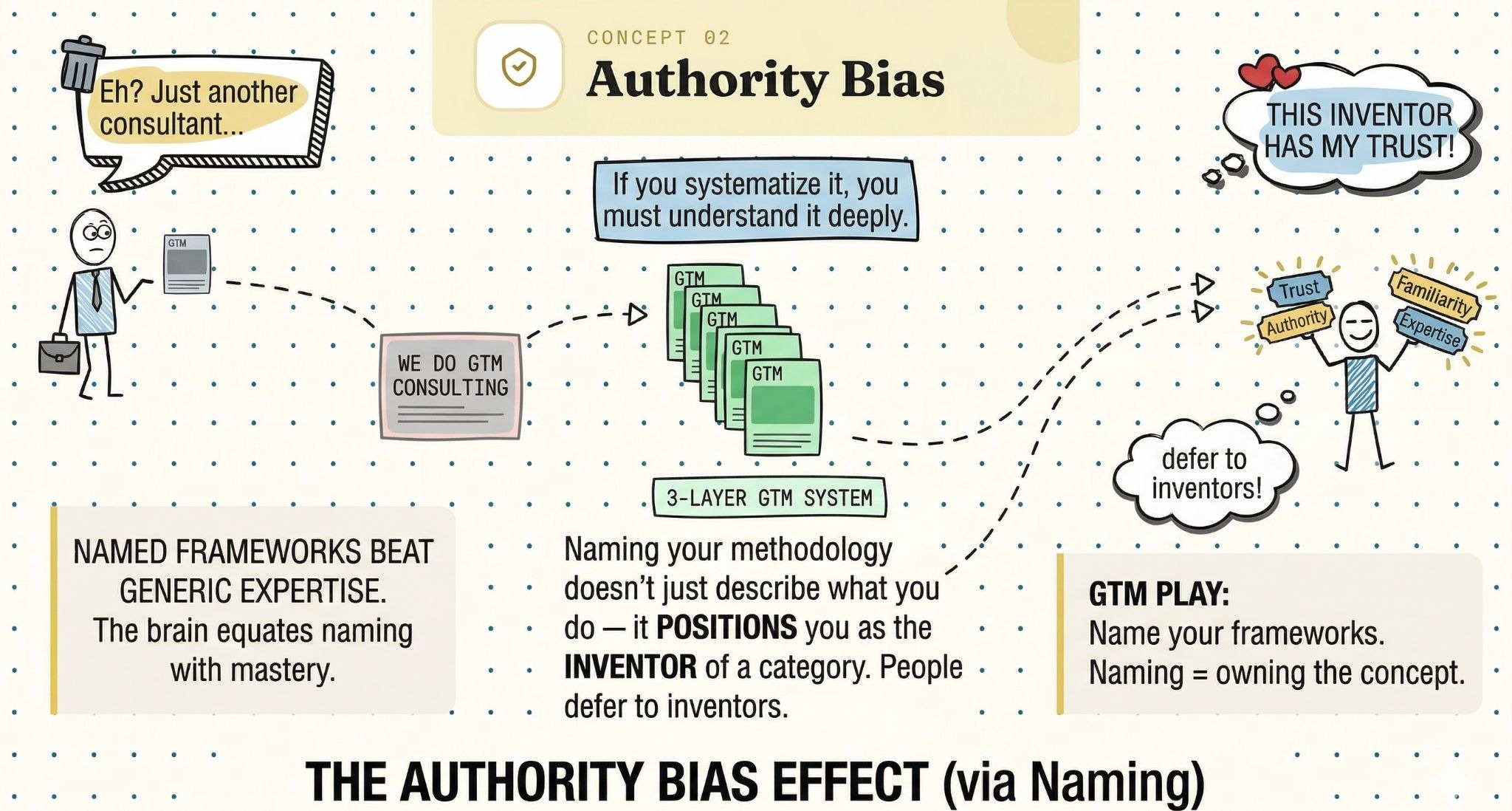
Concept 2# Authority Bias
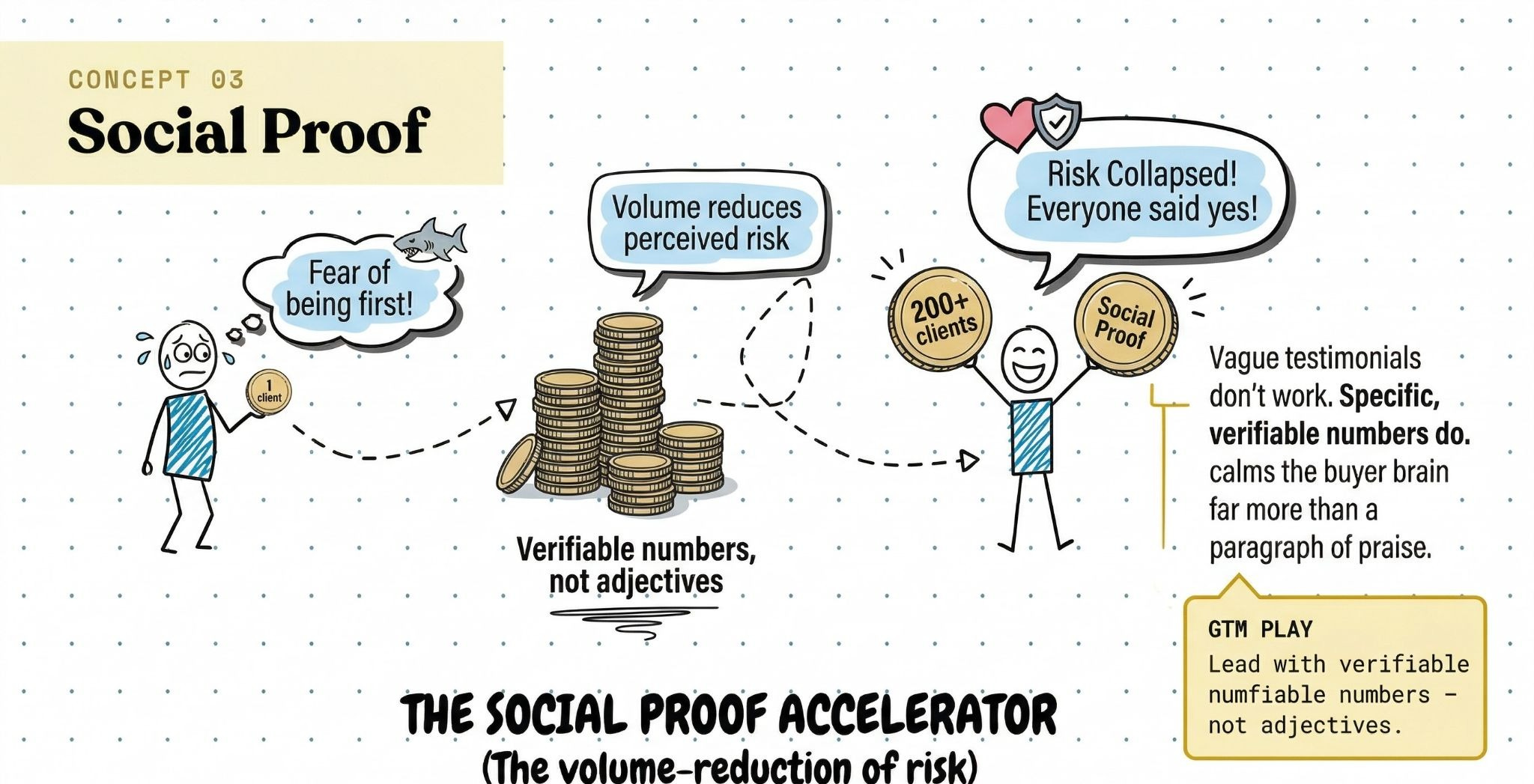
Concept 3# Social Proof
Phase 2# Engage – They’re Paying Attention, Don’t Waste It. Here’s How to Make Every Interaction Count.
Getting attention is step one.
Holding it and deepening it, is where most GTM motions quietly collapse.
The Engage phase is about earning enough psychological investment that your prospect keeps showing up.
Three effects govern this entirely:
Concept 4# Anchoring Effect
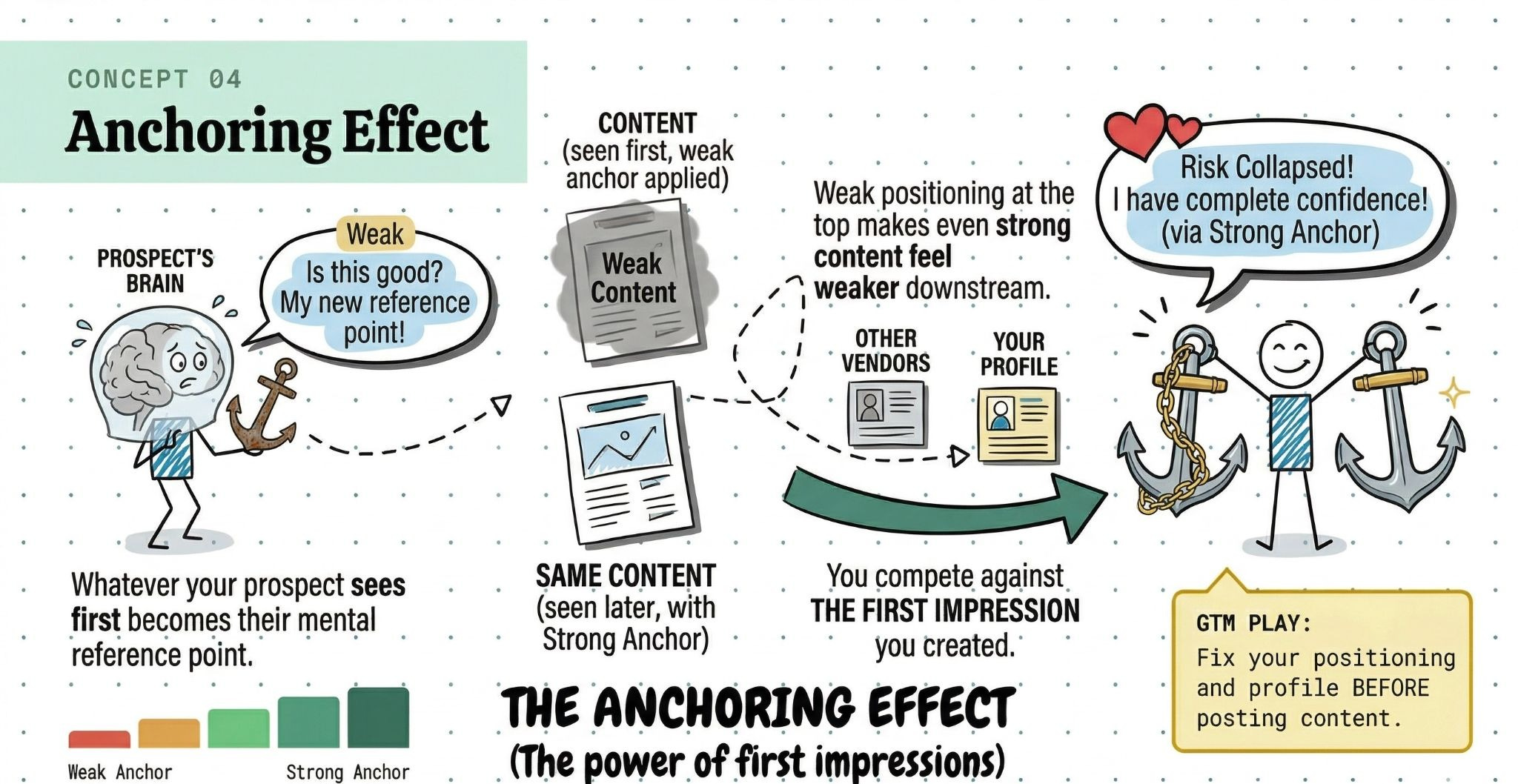
Concept 5# Reciprocity
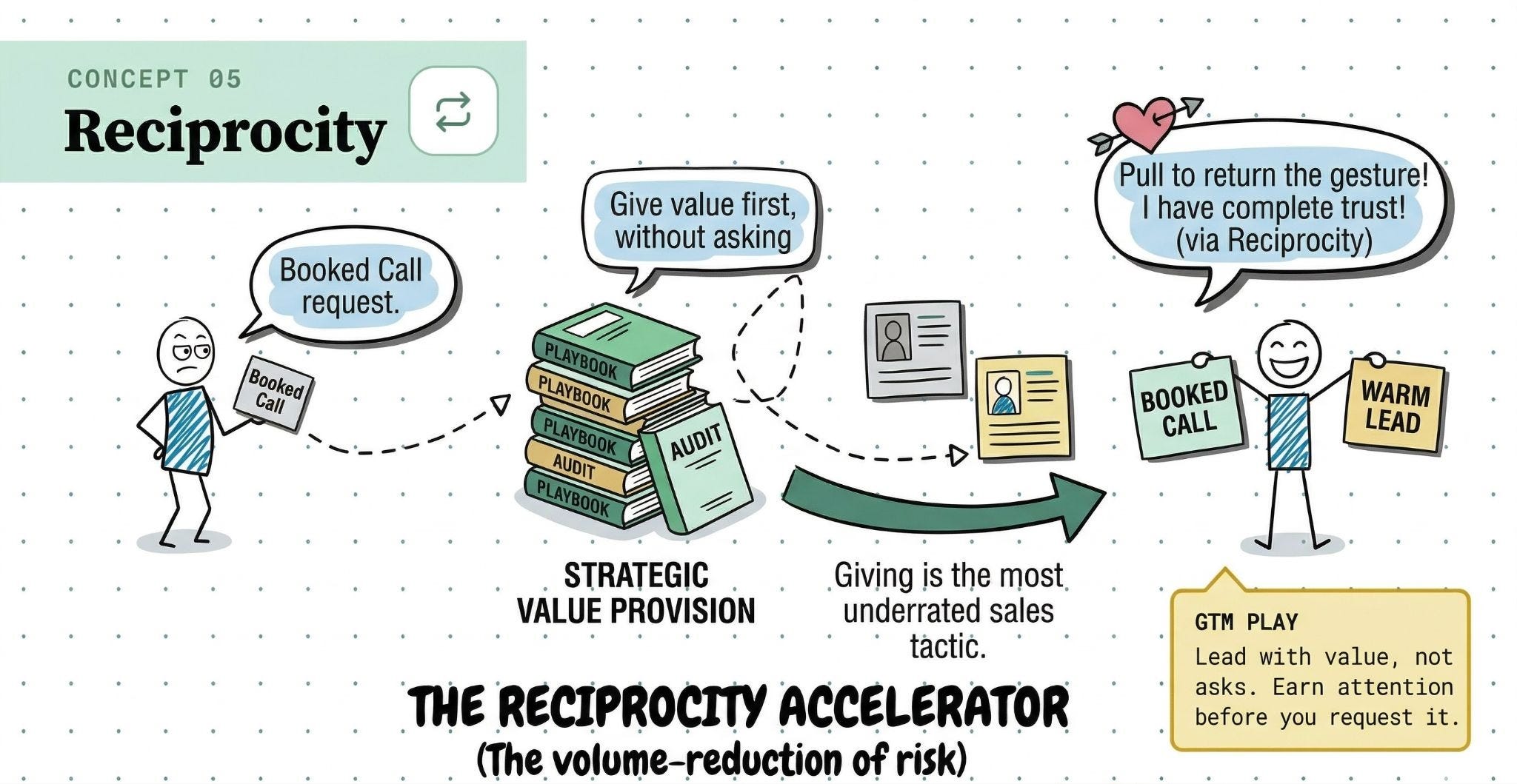
Concept 6# Loss Aversion
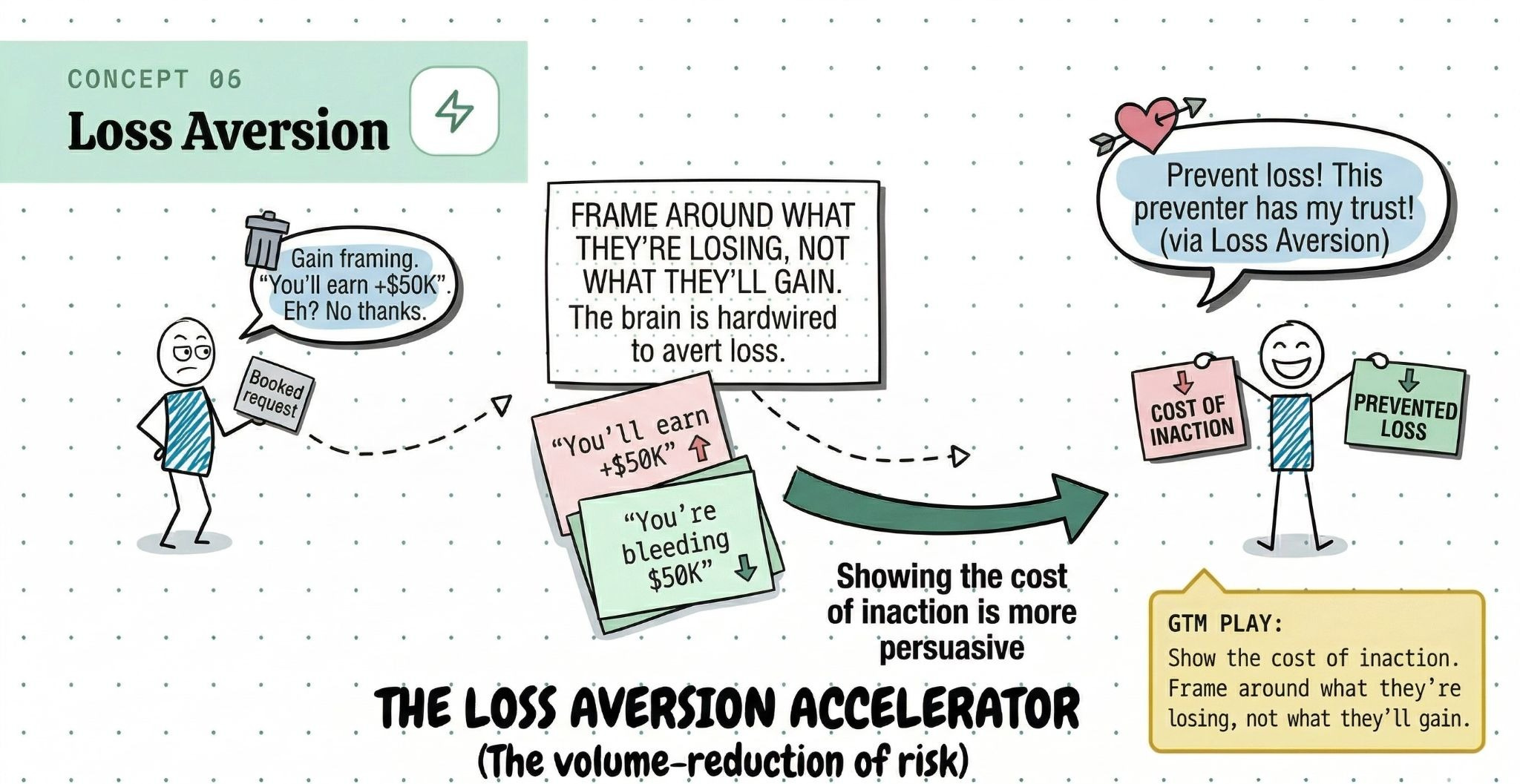
Why Most “Engagement Content” Fails (And What to Do Instead)?
Most GTM content tries to impress.
Psychology-led content tries to connect.
There’s a difference. Impressive content demonstrates expertise. Connected content makes the prospect feel seen, like you understand exactly where they are and what it costs them to stay there.
If your engagement strategy isn’t rooted in at least one of these three effects: anchoring, reciprocity, or loss aversion, you’re producing content that fills a calendar, not a pipeline.
Phase 3# Close – The Decision Has Already Been Made. Your Job Is to Remove the Last Bit of Friction.
By the time someone reaches the decision stage, most of the psychological work is done.
They’re not evaluating you from scratch, they’re looking for permission to say yes, or for a reason to wait.
Three psychological effects govern whether they act now or disappear:
Concept 7# Scarcity Effect
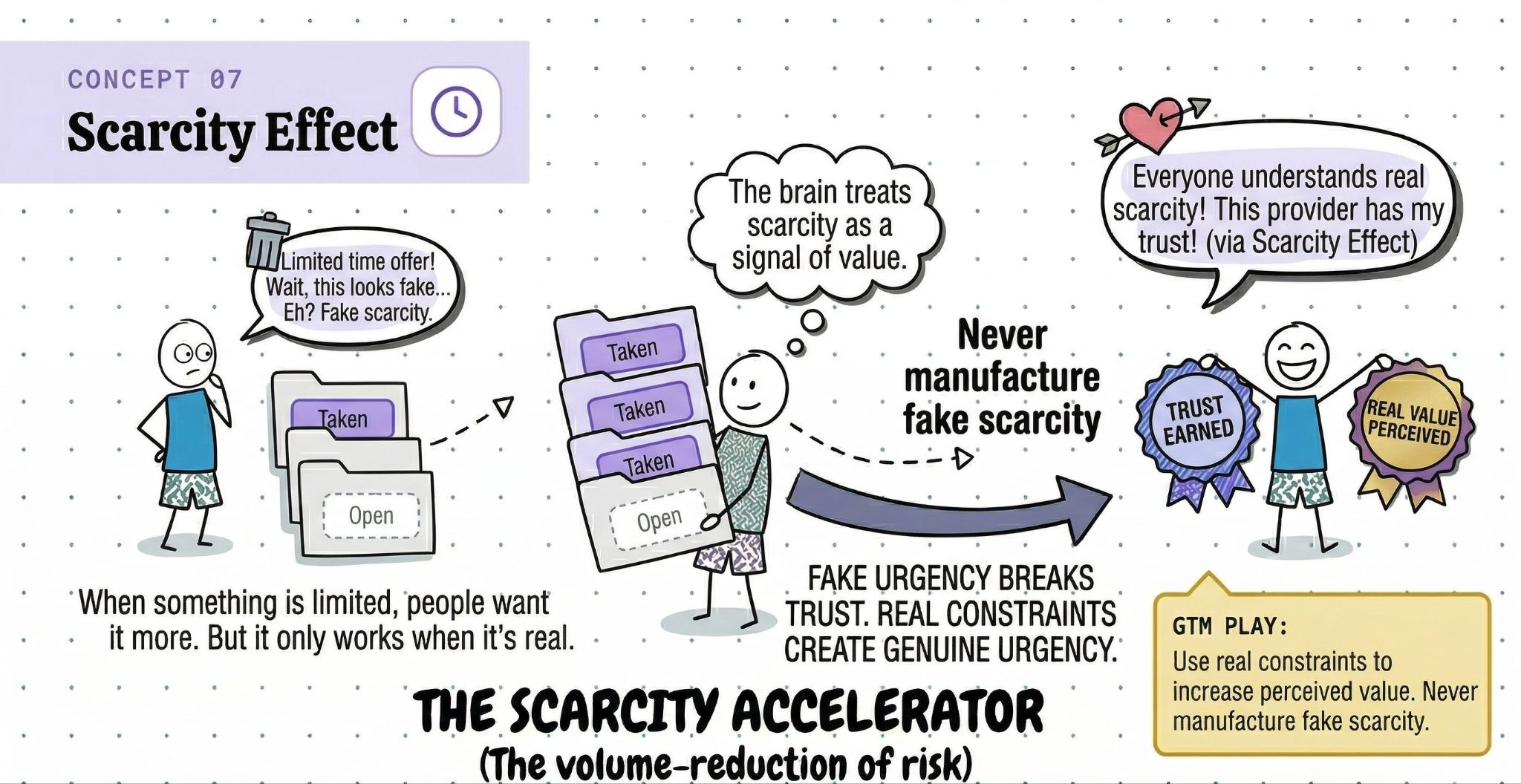
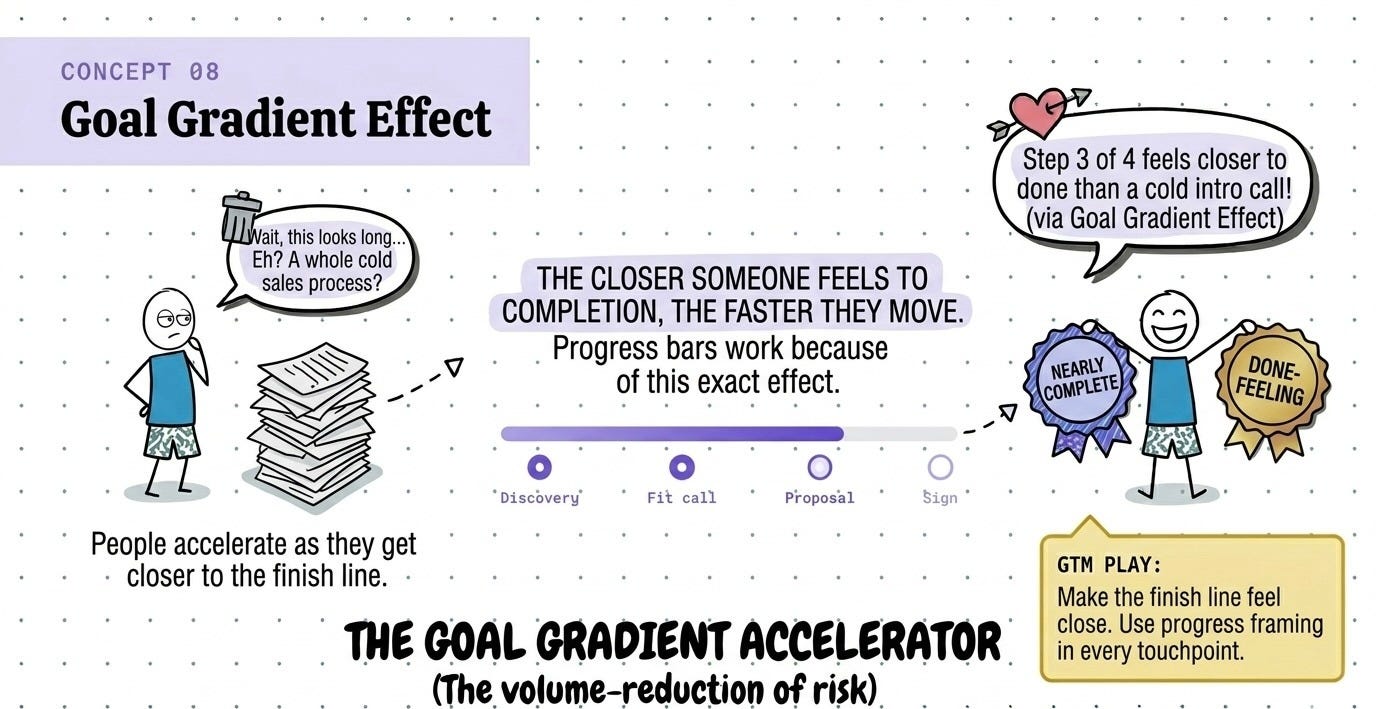
Concept 8#Goal Gradient Effect
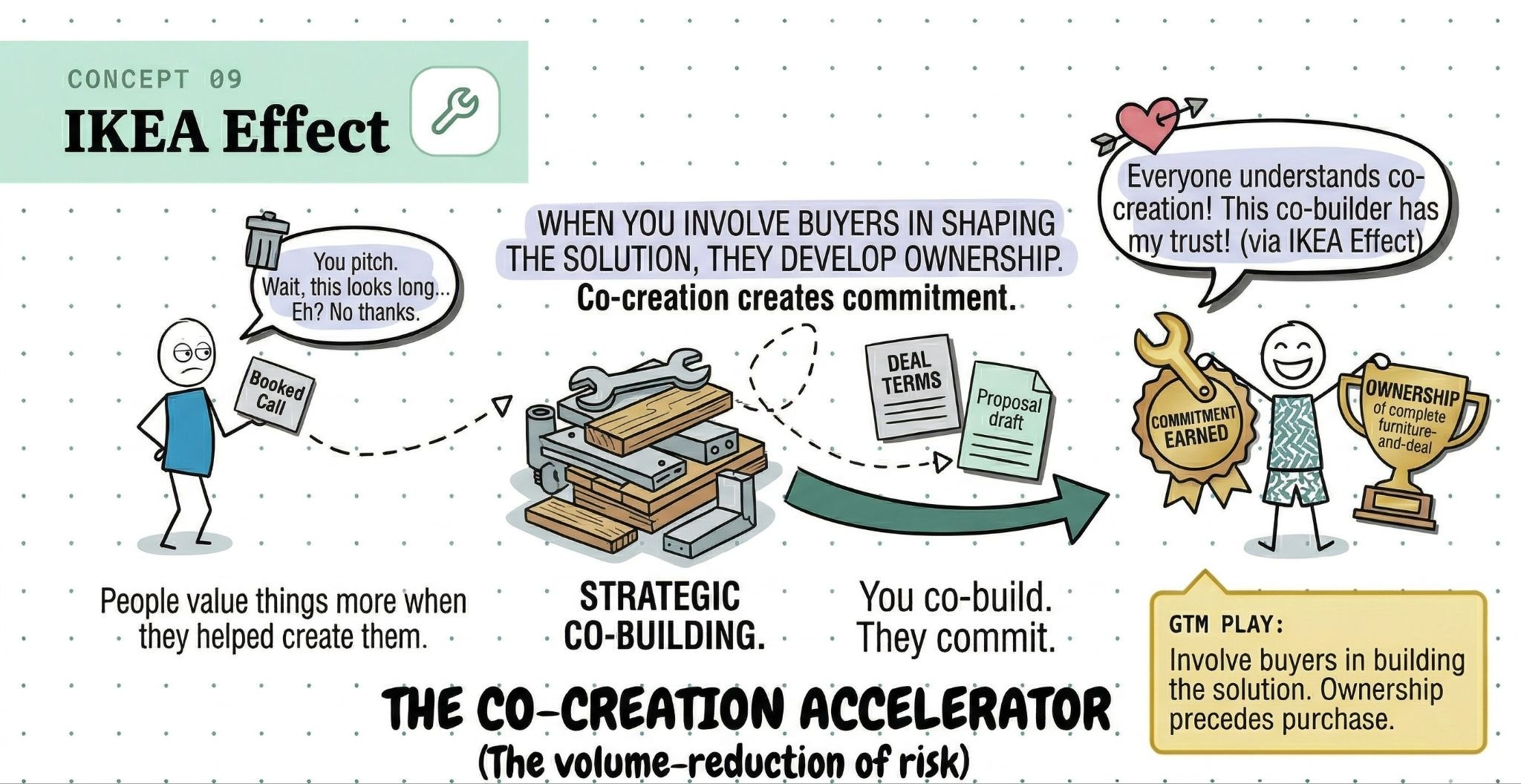
Concept 9# IKEA Effect
Stop Asking What to Do. Start Asking Why It Works.
Most GTM advice is a long list of tactics: post more, follow up faster, build a better deck, use this subject line.
And some of those tactics work, some of the time, for some people.
But the GTM teams that consistently outperform aren’t following better tactics.
They’re operating from a deeper model. They understand why buyers behave the way they do, and they design every touchpoint around those patterns.
Psychology isn’t a shortcut. It’s the foundation.
↳ When you understand that mere-exposure drives trust, you stop treating content like a chore and start treating it like compound interest.
↳ When you understand loss aversion, you stop listing features and start revealing hidden costs.
↳ When you understand the IKEA effect, you stop pitching and start co-building.
The formula is simple:
Attract (familiarity + authority + proof) + Engage (anchor + give first + show the risk) + Close (scarcity + progress + co-creation) = a pipeline that gets stronger every month, not weaker.
Most GTM advice tells you what to do. Psychology tells you why it works. Start with the why. The what becomes obvious.
Want a GTM motion built around how your buyers actually think? Book a call with me today.